Saturday, 30 July 2016

Thoughts on BvS Ultimate Edition


With Suicide Squad soon to be released, I thought I'd offer another look at DC's previous film, Batman v Superman: Dawn of Justice. However, what I want to focus on is the new version of the film (the "Ultimate Edition), which extends the film's running time to three hours. I reviewed the theatrical release earlier this year and stated how I felt it was a disappointing mess, so how does this new, R rated version stack up against it?

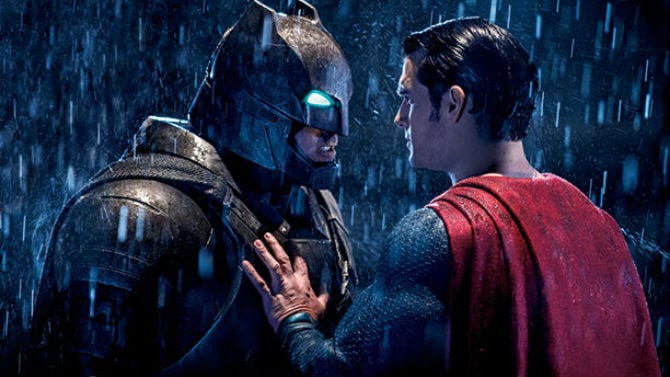
One of my main gripes with the theatrical release was how imbalanced the motivations of Batman and Superman were. There are clear enough reasons why Batman hates Superman, but the film never dedicated enough time as to why Superman should hate Batman. In the Ultimate Edition, the balance is restored somewhat by having more scenes of Superman (as Clark Kent) investigating Batman's "reign of terror" in Gotham. Two new scenes help to show how Batman's brand of justice has effected the residents of the city, with Clark even meeting the partner and child of one of Batman's victims. She warns Clark that Batman cannot be reasoned with, and that the only way to stop him is "with a fist". We see the influence this has on Superman when he confronts Batman towards the end, as he quickly turns to violence after failing to negotiate with him. Had this been expanded on further throughout the film as the reason why the two heroes end up battling, it would have made for a more satisfying altercation, as there would be genuine motivation for both characters to confront one another. Like in the theatrical release, however, Superman only engages Batman in a fight because Lex Luthor threatens to kill his mother, which is a much weaker idea than having them fight over a clash of morals and principle.

There is also more of a focus on Lex's plan to frame Superman, which in turn makes Lois Lane's role in the film bigger. Whilst these new scenes help to shed some light on how Lex has staged these events, the plan is still a confusing mess, and I was still scratching my head has to what his ultimate goal is. I was happy to see more time devoted to developing the story, but it any improvements over the theatrical version in this area are moderate. This, along with the Clark Kent investigation scenes, is where the majority of the new scenes are included, which is an overall wise decision as they where the two weakest aspects of the the original cut.

As far as action, there's not a lot of new stuff included. The main conflict between Batman and Superman has the odd extra punch thrown in, but that's about it. Thankfully, I'm pretty sure no new footage of the battle with Doomsday is included, as that scene dragged on and on in the original cut. With the new R rating, I was expecting a more drastic change in the violence presented in the film. I don't think having the film be more bloody would be an improvement (the film has to also appeal to young fans as well), but I still felt cheated given how the change in rating is so drastic. The scene where Batman takes down a room of thugs (arguably the best scene in the film) has some blood added in and an implied moment of Batman either killing or severely wounding one thug who stabbed him in the shoulder. This is the only instance where the violence feels a lot more adult The other action sequences, particularly the one at the end, still feel like standard superhero stuff.

I'm at a loss as to whether this new cut of the film greatly improves on the theatrical release. On the one hand, we get to see some of the better ideas that were not included which helps to make the confusing plot slightly more coherent. On the other hand, these added scenes tease us with "what could have been" had they been more significant, rather than having them lead into the disappointing motivations of the characters we saw in the theatrical release. I can't say I recommend it, but it at least means we get to see the complete version of the film. I'd much rather see what Zack Snyder fully intended us to see (even if it still isn't good) than a chopped up mess that was seen as either too long or too violent by censors.

Sunday, 3 July 2016

Manchester United: The Five Weirdest Louis van Gaal Tactics/Decisions


And now for something completely different. Rather than a film review, I thought some fresh content about one of my other interests would change things up a bit. One thing most people know about me is that I supported Manchester United Football Club, and I am greatly anticipating the upcoming season under new manager Jose Mourinho. Whilst looking back at the previous campaigns, which were by in large disappointing, it got me thinking about all the strange occurrences we endured under the management of Louis van Gaal. Off the pitch, van Gaal was known for his amusing quips and on again/off again relationship with the press. The happenings on the pitch were equally up and down, with us winning the FA Cup this year, but failing to qualify for next season's Champions League. I've thought long and hard about the moments on and off the pitch that left me most puzzled by this unique individual, and in no particular order, here are the top five:

5. Phil Jones taking corner kicks
A phrase that became something of a summary of van Gaal's approach, this was one of the most unpredictable (and unwanted) tactics in the two seasons under the Dutchman. With plenty of talented players good enough to deliver a decent corner kick, van Gaal opted for defender Phil Jones, a player with little-to-no experience of delivering at set piece situations. Whether this was an attempt simply to puzzle the opposition or he genuinely believed he had finally found the right man to take corner kicks remains a mystery. Needless to say, the decision didn't last long, and fellow Dutchman Daley Blind was appointed to deliver corner kicks for the whole of the 2015/16 season.

4. Selling Robin van Persie and Javier Hernandez in the same transfer window
Whilst perhaps not the strangest decision, this is the one that angered me the most, as these two were my favourite United players. In the summer of 2015, Javier Hernandez returned to United after a season-long loan at Real Madrid, adding to our striker options after we had decided not to purchase loanee Radamel Falcao on a permanent basis. During this time, Robin van Persie was sold to Turkish club Fenebahce after suffering his weakest season at United, scoring only 10 goals in all competitions. Whilst I was sad to see him leave, I was pleased to see Hernandez get another chance in the team, making substitute appearances against Newcastle and Club Brugge. After missing a penalty kick against Brugge, Hernandez was almost instantly sold to Bayer Leverkusen, where he scored 26 goals in all competitions. To further rub salt in the wound, van Persie rediscovered his scoring touch (despite not appearing as regularly as he perhaps would have wanted), netting 20 goals.

3. Angel Di Maria = Striker?
United broke the British transfer record when exciting playmaker Angel Di Maria joined for £59.7million. Primarily a winger or centre-mid, Van Gaal decided that the best way to utilise this talent was to play him up-front, making Di Maria ineffective in any game he played in that position. Di Maria lost confidence and finished his first season at the club with 4 goals in all competitions. His United career came to a swift end upon refusing to join up with the team on a pre-season tour of the United States, and he was sold to Paris Saint-Germain soon after.

2. Super-sub Nick Powell
After a dismal display in the 2015/16 Champions League group stage, United had to deliver a massive performance in Germany against VfL Wolfsburg in their final match. It was a must win situation, and the game was a crazy affair, with United taking the lead only to eventually concede 3 goals, with the game finishing 3-2. In this must-win game, van Gaal gambled on youngster Nick Powell (who had only scored one goal for the club and was continuously sent on loan throughout his United career), replacing Juan Mata towards the end of the match. Whether Powell actually touched the ball in the game is lost on me and, to the surprise of everyone except van Gaal, he made no impact in the game. Such was the difficulty of Powell finding a place in the first team, that he was released by United upon expiry of his contract. 

1. Miss a penalty, back of the queue
If there's one tactic I expect Mourinho to never consider, it's this one. Robin van Persie, Wayne Rooney and Juan Mata all fell victim to van Gaal's methods of who takes penalty kicks, with the rule being that if you miss, the next in line takes your place. The penalty kick is one of the most nerve-wrecking situations for players and fans, but van Gaal thought it would be a good idea to increase that pressure by having this stupid system in place. Van Perise was the first victim, missing what would have levelled the score against West Brom in the 2014/15 season. That same campaign, Rooney missed against Liverpool, though United won the match thanks to two Juan Mata goals. The Spaniard enjoyed a good run from the spot, but eventually missed against FC Midtjylland in the Europa League. Most teams stick to one player taking penalties, but United have seen several players take them under van Gaal, with only Mata doing well under the Dutchman's management. Here's hoping Mourinho chooses one player to score from the spot. Someone like new signing Zlatan Ibrahimovic, perhaps?

Saturday, 18 June 2016

X-Men: Apocalypse (2016) Review


"Everything they've built will fall!" - Apocalypse.


It seemed as though barley any time had passed between the release of three mammoth-sized superhero films. Batman v Superman: Dawn of Justice bored me, and so Captain America: Civil War acted as a painkiller and showed that superheroes in conflicted could be entertaining and not such a drag. After no time at all, we have yet another superhero film, and it seems as though people are treating X-Men: Apocalypse as the "one too many" release. Audiences are quickly being burnt out with the plethora of comic book films which are showing no signs of slowing down, but is the eighth entry in the X-Men franchise deserving of the disinterest, or is it just a case of it being released at the wrong time?

Following on from the craziness of 2014's Days of Future Past, X-Men: Apocalypse keeps things relatively straight-forward. Once again focusing on the younger incarnations of the X-Men, we are re-introduced to iconic characters such as Cyclops (Tye Sheridan) and Jean Grey (Sophie Turner). Their journey to become X-Men can't come soon enough, as an ancient evil in the guise of Apocalypse (Oscar Isaac) has awoken. Seeking to purify the world so that only the strongest mutants are the dominant species, Apocalypse assembles a new team of followers, including Magneto (Michael Fassbender). It's now up to Charles Xavier (James McAvoy) and the other X-Men to prevent Apocalypse from carrying out his plan.

Bryan Singer returns to direct, after continuing the franchise's success with Days of Future Past. Though he was able to tell a dizzying story in that film coherently, his direction here has the opposite effect. The story is less complex, but the pacing is a little off to begin with. Most of the first act has to establish where the characters are after the events of the last film, re-introduce the younger incarnations of the X-Men and also introduce the mythology of Apocalypse. It's a lot to juggle and the film comes across as imbalanced because of it. When it appears that Singer has finally got the ball rolling, there is an out-of-nowhere moment that halts everything. Colonel Stryker (Josh Helman) reappears and captures some of the X-Men, so the one's left behind have to go and rescue them. No of this seems to have any connection to the main plot of Apocalypse, and it takes up way too much screen-time. The sequence only exists to have Hugh Jackman keep up his record of appearing in every X-Men film, but I don't see much point in having another scene showing us the origins of Wolverine when X-Men 2 (2002) already told us plenty.

One thing the film did make we realise was how much I've missed seeing James McAvoy and Michael Fassbender as Charles Xavier and Magneto. Many fans loved their chemistry in X-Men: First Class (2011), and both actors are as fantastic as ever here. In this film, we see them forced to contemplate exactly where they stand on the existence of both humans and mutants, with Magneto joining forces with Apocalypse and Charles having to confront Apocalypse on a telepathic level. Their scene's are the best parts of the film, and I'd be more than happy to see them return for more. Both characters are infinitely more compelling than the villain, which I'm sad to say doesn't fit the supposed massive scale I expected. With Apocalypse seeing himself as more a of a god than a mutant, I expected a stronger presence than menace, but he has very little to do and doesn't demonstrate much of his powers throughout the film. His backstory sets him up to be the most incredible foe the X-Men have ever faced, but he only confronts the team once and doesn't achieve much other than assembling his essential "Four Horseman".

Finally, I would like to mention my feelings of this film alongside my thoughts on the two other superhero blockbusters I have already reviewed. Although X-Men: Apocalypse is clunky and lacks a good villain, it was the first of the three films where I felt I had actually watched a story play out on-screen. Batman v Superman is hardly a film, it exists purely to set up sequels and throw iconic characters at us without focusing on why we should be invested in their conflict or feelings. Civil War, while an entertaining experience, is all built around that one massive fight sequence. The conflict in Civil War is better than BvS, but on reflection, it will serve as an example of how dumbed-down we like our cinema nowadays. Of course, a big selling point of X-Men: Apocalypse is seeing the team fight the villains, but there is much more emotional weight and less hammy acting than  BvS or Civil War. Bryan Singer actually wants to get you invested in his characters, and the chemistry between the cast was more believable and enjoyable overall. Bottom-line: it may not be the best superhero film, but with Civil War being praised as some kind of masterpiece, this was always going to have a lukewarm reception. I, however, cannot fathom why everyone thinks Civil War is so perfect, and so I recommend you check out X-Men for a more engrossing and just as entertaining film. 

Oh, and its a million times better than BvS, just in case you hadn't figured that out yet.

Sunday, 29 May 2016

Deathstalker (1983) Review


"Heroes and fools... are the same thing!" - Deathstalker.


With the release of many a blockbuster waiting to soon find themselves reviewed here, I thought I'd change things up a little bit by reviewing a film not many people will have heard of. My choice is the 1983 sword-and-sorcery film Deathstalker, released on the heels of box-office success Conan the Barbarian (1982). Low-budget Conan clones were all the rage back in the early 80's, and  Deathstalker proved to be one of the more successful entries, garnering a cult following and three sequels. It is a fascinating watch today, and will be a guilty-pleasure of mine for many years to come.

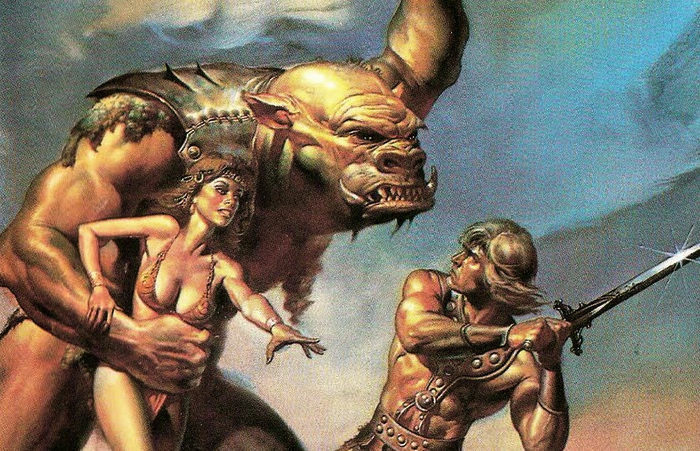
The lone-warrior Deathstalker (Rick Hill) is tasked by a witch to retrieve three powerful relics: a sword, an amulet and a chalice. Discovering the sword in a cave, Deathstalker sets out to retrieve the other two relics, which are in the possession of an evil sorcerer named Munkar (Bernard Erhard). Munkar plans to attract the strongest warriors in the land to participate in a fighting tournament, under the false pretence that the winner will inherit his kingdom and riches. Deathstalker, along with new-found compatriots Oghris (Richard Brooker) and Kaira (Lana Clarkson), arrives to participate in the tournament and retrieve the other relics, as well as rescue the captive Princess Codille (Barbi Benton).

At only 80 minutes long, this is a short feature, and the time flies by when watching it because its so entertaining. There are too many crazy moments to count, which makes the film difficult to review. I could talk about the simple plot, for example, in a negative way, but this is the kind of film where the craziness overshadows the more important aspects of a film. So I'll take a look at the characters and some of the film's highlights. Let's start with our hero, Deathstalker. Known only by this name (on the odd occasion hilariously shortening it to simply "Stalker"), he is a powerful warrior with a meat-headed attitude. The very first scene involves him saving a girl from goblin-like creatures, only to undress her before being interrupted. He seeks neither fame nor glory, but is more than happy to accept going on a quest to obtain powerful relics, which will no doubt make him famous and glorified anyway. With his cold demeanour and misogynistic ways, he isn't much of a hero, but he's not as evil as Munkar, which makes him seem more heroic by comparison. Rick Hill is perfect for this role, delivering his cheesy one-liners in his low voice with confidence. When not spouting hilarious dialogue (like the above quip), he is able to appear intimidating due to his large physique and fighting skills. 

Deathstalker's companions are just as memorable as he is, and there are some interesting (and bizarre) creative choices to their portrayals. Kaira is a female warrior who hooks up with Deathstalker, but is also able to fight her own battles. All the other women in the film are portrayed as victims, but Kaira is the exception. She intends to compete in Munkar's tournament, and is more than capable of holding her own in a fight. She does, however, succumb to some of the more misogynistic aspects of the film despite her being a more strong-willed character. She appears bare-chested for most of her screen-time, and Deathstalker forces himself upon her on the first night they meet. No wonder they have such a strong bond: he embarks on a quest that will inadvertently make him famous, and she fights against female oppression, but is more than happy to enjoy Deathstalker having his way with her within hours of first meeting him. Both of them are as morally confused as each other it would seem. She also gets very little dialogue, and is killed off before she even gets a chance to compete in the tournament, making her seem not as important as the other characters. Though she is certainly memorable, it would have been nice to see her last until the end, as it would at least mean one woman triumphs over the male dominance of the film. 

Oghris, like Deathstalker, is a skilled fighter, and at first appears to be a more noble character than the lead. In his first scene, he rescues a woman from being raped (with the eventual help of Deathstalker). However, he indulges himself in having his way with women upon arrival at Munkar's castle, and is secretly in cahoots with Munkar. He also wears a ridiculous piece of armour: a half-vest thing which would appear to be more suitable for a female character. He competes in the tournament and does well, but meets his end at the hands of Deathstalker after learning of his betrayal. The two of them have a pretty good fight scene, with lots of props smashed and a surprising amount of drama. Though much of the film is hard to take seriously, the lack of dialogue involved before they fight makes for a decent portrayal of friends turned enemies.


Bernard Erhard is arguably the best actor in the film. His appearance is weird, with a massive tattoo on the side of his head, but he makes Munkar a threatening villain and more than a match for Deathstalker. Being a sorcerer, he exhibits all sorts of unusual powers throughout the film, the weirdest being the ability to change a man into a woman! He's not over-the-top and bombastic as one might expected in a film of this nature, instead radiating a disturbingly calm presence. He also suffers perhaps the most brutal death in the film: being ripped limb from limb after Deathstalker defeats him.

The characters are a lot of fun, but the plethora of strange scenes is what makes Deathstalker the guilty-pleasure that it is. I've heard that some scenes had to be removed or significantly cut down, as the filmmakers were aimed for a runtime of around 80 minutes. If true, it at least makes sense of some of the dodgy editing in certain moments. Sometimes the editing is so fast you can barely process what is happening. There's a scene near the beginning where Deathstalker and a witch fight some of Munkar's henchman, and the dialogue is cut together so fast that it sounds very unnatural. There are other instances where the film feels like it was improvised, such as a fight in Munkar's castle where all hell breaks loose amongst the fighters. It's so chaotic that I feel the director must have said "do whatever you want and we'll keep the best bits in the film". This is my favourite scene in the whole film because its completely ridiculous and features the best method of fighting ever. In a moment of pure brilliance, a pig-like creature rips a man's arm off and uses it to club another man to death. If I had to show one scene that sums up the enjoyable stupidity of Deathstalker, this would be it. Check it out for yourself:


With its memorable characters and cheap charm, Deathstalker is a fun-filled ride from start to finish. Though its depictions of female characters are distractingly old-fashioned, there is still enough action and quotable dialogue to make this a great addition to an ultimately silly genre. Its one of those films best enjoyed with a group of friends, as some of the silliness has to be seen to be believed. Track it down on VHS or DVD, sit back, and switch your brain off for 80 minutes of cheese!

Saturday, 7 May 2016

Captain America: Civil War (2016) Review


"I know we're not perfect, but the safest hands are still our own." - Captain America.


My work schedule is finally starting to clear up. But, no matter how busy I was, there was always room to fit in going to see Captain America: Civil War. I really admired last year's Avengers: Age of Ultron (the first film I reviewed on this blog), and so I was looking forward to seeing how these characters have progressed since then. This time around, the Avengers aren't up against a madman wanting to destroy or takeover the world, but instead are torn apart over government interference and personal issues. Boasting new, exciting characters such as Black Panther (Chadwick Boseman) and Spiderman (Tom Holland), Civil War aims to up the ante greater than any other MCU film. With it's engaging story and characters as well as incredible action, the film achieves its goal and is a stunning opening chapter in the third phase of the most successful franchise in film history.

Following on one year after the Avengers defeated Ultron, Captain America (Chris Evans) leads Scarlet Witch (Elisabeth Olsen), Black Widow (Scarlett Johansson) and Falcon (Anthony Mackie) on another mission. Their attempts to prevent the theft of a biological weapon ends in many innocent lives lost, with Scarlet Witch unable to be in complete control of her powers. This leads Iron Man (Robert Downey Jr.) to try and convince the team to agree to a new government initiative to keep the Avengers' actions limited, so as to lessen the chances of any more destruction. This causes a fraction within the team, with Captain America insisting they should act on their own freewill, and Iron Man feeling the imitative is the right thing to due after feeling guilty about creating Ultron in the last film. The divide is cemented by an attempt to frame Captain America's friend, Bucky (Sebastian Stan), which is orchestrated by a man named Zemo (Daniel Bruhl). Zemo seeks revenge on the team for the destruction they caused to his country in the last film, and feels the best way to do so is by having them fight one-another. So its Captain America and his Team vs. Iron Man, his team and the government, in the biggest superhero conflict ever devised!

A major plus point for the film is that it invests plenty of time into the motivations, emotions and personalities of the many characters. We've seen the tension between Iron Man and Captain America in previous films, but never have the stakes been this high. There's good drama to be had from Tony Stark (Iron Man) contemplating whether or not the Avengers are any better than "the bad guys" if they aren't supervised, but at the same time, Captain America's thoughts are difficult to argue against. So really, whichever "team" you decide to cheer for will come down to which you find the more cool, as both lead characters put in compelling arguments for and against the supervision initiative. I was also pleased that Scarlet Witch and Vision (Paul Bettany) are further developed. Scarlet Witch has made her transition from evil to good, but she is the most emotionally unstable of the group. Vision, being the all powerful being that he is, is able to understand her struggles, which covers the more sentimental parts of the film. This development aids the conflict as Scarlet Witch joins Captain America's side and Vision joins Iron Man's, which makes for far better viewing than just having a "good" character fight the token "bad" character, as is so often the case with superhero films.

Alongside the well written characters is the outstanding action. After city-scale battles in the two Avengers films, Civil War delivers on keeping up Marvel's high standard. This is helped by pitting the team against on another, as now they are facing their equals in combat. Before, the Avengers battled alien soldiers and robots, but now we get to see an all out battle involving technology, magic and hand-to-hand combat all being used against one another. There is also room for plenty of humour, too, especially when Ant-Man (Paul Rudd) is involved. This prevents the lengthy action sequences from becoming tiring, and is a more than welcome presentation after the anti-climatic Batman v Superman a few months earlier. I don't want to go into too much depth here, as the action is the film's selling point and is best experienced without knowing all the little details.


Aside from the promise of seeing the Avengers battle one-another, much of the film's hype revolved around the introduction of two new characters. The first is Black Panther, who joins the fight after Bucky is framed for murdering his father. With incredible speed and agility, he is more than a match for most of the team. Chadwick Boseman is thankfully given much to do with the role, going from a proud son to a vengeful vigilante, whilst still remaining likeable throughout. However, for all of Black Panther's might and presence, he was never going to top the inclusion of Spiderman, seen here for the first time in the MCU. Whilst it was only two years ago we last saw this character (in the underwhelming mess The Amazing Spiderman 2), audiences aren't growing tired of him anytime soon, as proven by the reaction his reveal received online as well as the screening I was at. Tom Holland is the first teenage actor to play the role, and his performance is noticeably different from previous actor's portrayals as a result. He has a vulnerable look due to his young age, but when in costume, delivers all the humour and tricks one could hope for. I wasn't surprised to see he wasn't in the film too long, as they've yet to fully establish him in the MCU and was more a treat for the fans than anything else. I look forward to seeing him in his own MCU film next year.


The film is selling itself on the spectacle of superhero team vs. superhero team, and you get exactly that. However, there is nothing too surprising overall about the plot, aside from one potential game-changer reveal towards the end. Whilst it isn't as cookie-cutter as other superhero movies, there isn't anything that stands out as brand new, other than the sheer scale of action and characters involved. That said, there is certainly a lot to enjoy throughout, especially the battle at the airport, where all the heroes get a chance to show off their unique abilities. After the depressing tone of Batman v Superman: Dawn of Justice, this film feels like a breath of fresh air. It's much more fun and the conflict is handled so much better as the focus is mainly on Iron Man and Captain America. The supporting characters are all memorable, and it nicely sets up the rest of the series. Chances are you've probably seen the film by now, but if you haven't, go in expecting a fun ride and some decent drama and you'll have a blast. 

Thursday, 31 March 2016

Batman v Superman: Dawn of Justice (2016) Review


"The greatest gladiator match in the history of the world"- Lex Luthor.


After a long absence, I'm back writing reviews again. What better way to return than by looking at one of the biggest (if not THE biggest) blockbusters of the year. Batman v Superman: Dawn of Justice is the latest instalment in the DC Extended Universe, and marks the first ever live-action encounter between two of the most iconic comic book characters ever created. Naturally, the film has been released on the back of an enormous amount of hype, so how does it fair as not only a follow up to 2013's Man of Steel, but as the catalyst for further encounters between other DC characters?

The film opens with the climatic battle from Man of Steel, where we meet Bruce Wayne (Ben Affleck) as he witnesses Superman (Henry Cavill) inadvertently causing city-wide destruction. With many casualties as a result of this carnage, Bruce grows a strong hatred for Superman. Superman's actions have also caused controversy with the public, with some viewing him as a hero and others a threat to humanity's existence. The events of Man of Steel have also caught the attention of businessman Lex Luthor (Jesse Eisenberg), who seeks to create his own weapons from recently discovered kryptonite. Bruce comes into contact with Luthor and the mysterious Diana Prince (Gal Gadot) and plans to use Luthor's kryptonite to destroy Superman. Through coaxing by Luthor, Batman and Superman finally meet in a battle for the ages. 

Story-wise, the film is a mess. For something which is selling itself on the grounds of two superheroes fighting, it tries to establish too much before hand. There are too many scenes that eat up screen time and don't really go anywhere, such as a dream-like sequence where Bruce imagines being in conflict with Superman's henchmen, only to be woken up by another vision warning him of future events. Whilst director Zack Snyder is obviously trying to set up future films with scenes like this, they hinder the film's pacing badly. In trying to set up so much, the film achieves very little and so the central conflict between Batman and Superman meanders through all the other sub-plots, diminishing the epic tone the film is trying to achieve. 

In terms of the characters, the film gets things right on Batman's side of things. Much was made of the casting of Ben Affleck as the Dark Knight, especially after a less than well received portrayal of Marvel superhero Daredevil back in 2003. Affleck, like Michael Keaton before him, has proved doubters wrong with his portrayal. More aggressive than previous depictions of the character, this is a Batman consumed with rage, and his hatred for Superman is what drives the conflict. Superman, however, has little to no development from Man of Steel. In Man of Steel there was an obvious progression of his character, but any development in this film comes from the public's opinion of him. There isn't a personal connection established between him and Batman, and so he only fights him after Lex Luthor threatens to kill his foster mother, Martha (Diane Lane). Martha has less of a part to play here, only being used as a way for Lex to control Superman and to contribute to perhaps the dumbest reason Batman and Superman stop fighting. I won't spoil exactly what happens, but trust me, it's a cheap way to for Batman to forgive and team up with Superman. Jesse Eisenberg's performance as Lex Luthor has been branded irritating by some critics, with him being hard to take seriously and therefore not much of a threat. While I didn't think much of his portrayal, I thought it at least provided some light relief in a film that takes itself so seriously. With Batman being a tormented soul and Superman a figure of controversy, having a more zany character didn't do much harm for me.


As far as the action goes, Batman v Superman does what it says on the tin. However, the conclusion drags on into a showdown with a huge creature (one of the many sub-plots squeezed into the film), in which Batman and Superman team-up with Wonder Woman. I felt the film should have stuck with having more confrontations between Batman and Superman throughout the film, rather than one fight at the end that leads to them teaming up. The creature they fight, Doomsday, is very un-spectacular, as he is an exact copy of Abomination from 2008's The Incredible Hulk. Wonder Woman only seems to show up purely for fan satisfaction, and really should have had her own film before this one so that she doesn't feel so tacked on. While the fight between Batman and Superman may greatly satisfy some, the longevity of the climatic fight involving Doomsday makes for a draining conclusion. 

Despite a talented cast and some good ideas for Batman, the positives are squashed by a confused plot that tries to establish too much. The idea of Batman and Superman in conflict is enough to hold a film together, so the addition of introducing Wonder Woman and focusing too much on setting up sequels makes the film a drag. This is a two and a half hour film that could easily have been condensed into and two hours at most. I should have left the cinema having been wowed by a film that includes Batman and Superman together, but instead I felt exhausted by the plot, long conclusion, and perhaps the most predictable ending shot ever. After enjoying Man of Steel for the most part, this is a clear step backwards for DC. Here's hoping Marvel can get the superhero vs. superhero concept right in Captain America: Civil War.

Thursday, 18 February 2016

Freddy vs. Jason (2003) Review


"The only thing to fear, is fear himself" - Freddy.


I've now done two comparison articles on Friday the 13th and A Nightmare on Elm Street, so what better way to tie them together by reviewing the film that pitted the horror icons against one another? Freddy vs. Jason does exactly what you expect. It's an ultimately silly romp that's both entertaining and obviously flawed at the same time. Despite divided opinions on who should be victorious in the end, the film at least has some plus points and could be seen as the instigator for Hollywood to produce more crossover films, such as the following year's Alien vs. Predator.

The plot is bizarre, but it must have been difficult thinking up a plausible way to bring Freddy and Jason together in the same film. What we have here is Freddy using Jason to spread fear amongst the teens of Elm Street. Through that fear and remembering the terror Freddy caused, he will be able to return to stalk the teens once more. However, Jason refuses to cease his bloody rampage, killing many of the people Freddy wants for himself. This brings the two of them together in conflict, with the other characters caught in the middle, unsafe from Freddy in their dreams and equally at risk awake with Jason on the loose. 

As you've probably guessed by now, any other characters besides Freddy and Jason become secondary to the enormous body count and fighting. The film introduces all new characters, and even try and give lead girl Lori (Monica Keena) a connection to Freddy. But before any semblance of depth can be created or any interesting interactions between the teens can take place, Jason shows up to hack his way through them all and then fight Freddy for the second half of the film. Part of the problem is the amount of characters introduced, as the film is already trying to balance having the two most iconic slasher villains together. So many characters quickly appear and then are killed off, which means they aren't memorable and only hinder the pacing of the film. The tone of the films is also a mess, with some appropriately dark material exploring Jason's mind and the opening showing a pre-demonic Freddy, which serves as a reminder as to just how twisted he is. However, the insanely over-the-top kills and strange dialogue (Freddy's appearance mockingly referred to as a "Christmas sweater" and his glove having "butter knives") destroys any seriousness. I don't mind the film having a sense of humour so that there isn't too much doom and gloom, but the attempts to be a bit less serious here are a major distraction, to the point where you can't even laugh at it in a "so bad it's good" kind of way.


Despite this, you get plenty of moments where Freddy and Jason share the screen. They don't just meet up at the end to battle, there are numerous instances of confrontation throughout. Robert Englund makes his final appearance to date as Freddy and is by far the standout performer. His usual enthusiasm for the role is a huge asset for the film, as he is the only character with dialogue to have any charisma. Then there's Jason, played by Ken Kirzinger, slightly redesigned after his "futuristic" look in 2002's Jason X. Kirzinger was a stunt double for Kane Hodder, who played Jason in Friday the 13th Part VIII: Jason Takes Manhattan. I really enjoy his performance as Jason, as he makes every move count. From the way he walks to how he fights, Kirzinger is a worthy successor to Hodder. Both he and Englund are fantastic in the film's gory showdowns, especially considering the obvious height difference between the two and the extensive makeup required for the characters. The fights are by far the best scenes in the film, featuring lots of blood and some pretty nifty choreography. For a film labelled as a horror, it is actually superior in the action department more than the scares. The ending leaves the winner open for debate, which I think is a smart move as the film clearly doesn't want to divide fans by having one of the characters clearly triumph over the other. If only the rest of the film could have the same level of positives as how the two villains are portrayed, I would care more than a little as to who wins (for the record, I prefer Freddy).

Freddy vs. Jason is an overall strange experience. The cool factor is raised to maximum when Freddy and Jason are together, but everything else is pretty stale. Without the two villains, the confused tone and disposable characters would not only plummet the film, but also prevent it from having anything unique whatsoever. But in the end, if you're really curious as to who wins or how a crossover between two popular slasher franchises could potentially work, then there are certainly worse examples out there than Freddy vs. Jason. Just don't expect the creativity of the original Nightmare on Elm Street or the atmosphere of the original Friday the 13th and you should get a kick out of it.