Showing posts with label A Nightmare on Elm Street. Show all posts

Thursday, 18 February 2016

Freddy vs. Jason (2003) Review


"The only thing to fear, is fear himself" - Freddy.


I've now done two comparison articles on Friday the 13th and A Nightmare on Elm Street, so what better way to tie them together by reviewing the film that pitted the horror icons against one another? Freddy vs. Jason does exactly what you expect. It's an ultimately silly romp that's both entertaining and obviously flawed at the same time. Despite divided opinions on who should be victorious in the end, the film at least has some plus points and could be seen as the instigator for Hollywood to produce more crossover films, such as the following year's Alien vs. Predator.

The plot is bizarre, but it must have been difficult thinking up a plausible way to bring Freddy and Jason together in the same film. What we have here is Freddy using Jason to spread fear amongst the teens of Elm Street. Through that fear and remembering the terror Freddy caused, he will be able to return to stalk the teens once more. However, Jason refuses to cease his bloody rampage, killing many of the people Freddy wants for himself. This brings the two of them together in conflict, with the other characters caught in the middle, unsafe from Freddy in their dreams and equally at risk awake with Jason on the loose. 

As you've probably guessed by now, any other characters besides Freddy and Jason become secondary to the enormous body count and fighting. The film introduces all new characters, and even try and give lead girl Lori (Monica Keena) a connection to Freddy. But before any semblance of depth can be created or any interesting interactions between the teens can take place, Jason shows up to hack his way through them all and then fight Freddy for the second half of the film. Part of the problem is the amount of characters introduced, as the film is already trying to balance having the two most iconic slasher villains together. So many characters quickly appear and then are killed off, which means they aren't memorable and only hinder the pacing of the film. The tone of the films is also a mess, with some appropriately dark material exploring Jason's mind and the opening showing a pre-demonic Freddy, which serves as a reminder as to just how twisted he is. However, the insanely over-the-top kills and strange dialogue (Freddy's appearance mockingly referred to as a "Christmas sweater" and his glove having "butter knives") destroys any seriousness. I don't mind the film having a sense of humour so that there isn't too much doom and gloom, but the attempts to be a bit less serious here are a major distraction, to the point where you can't even laugh at it in a "so bad it's good" kind of way.


Despite this, you get plenty of moments where Freddy and Jason share the screen. They don't just meet up at the end to battle, there are numerous instances of confrontation throughout. Robert Englund makes his final appearance to date as Freddy and is by far the standout performer. His usual enthusiasm for the role is a huge asset for the film, as he is the only character with dialogue to have any charisma. Then there's Jason, played by Ken Kirzinger, slightly redesigned after his "futuristic" look in 2002's Jason X. Kirzinger was a stunt double for Kane Hodder, who played Jason in Friday the 13th Part VIII: Jason Takes Manhattan. I really enjoy his performance as Jason, as he makes every move count. From the way he walks to how he fights, Kirzinger is a worthy successor to Hodder. Both he and Englund are fantastic in the film's gory showdowns, especially considering the obvious height difference between the two and the extensive makeup required for the characters. The fights are by far the best scenes in the film, featuring lots of blood and some pretty nifty choreography. For a film labelled as a horror, it is actually superior in the action department more than the scares. The ending leaves the winner open for debate, which I think is a smart move as the film clearly doesn't want to divide fans by having one of the characters clearly triumph over the other. If only the rest of the film could have the same level of positives as how the two villains are portrayed, I would care more than a little as to who wins (for the record, I prefer Freddy).

Freddy vs. Jason is an overall strange experience. The cool factor is raised to maximum when Freddy and Jason are together, but everything else is pretty stale. Without the two villains, the confused tone and disposable characters would not only plummet the film, but also prevent it from having anything unique whatsoever. But in the end, if you're really curious as to who wins or how a crossover between two popular slasher franchises could potentially work, then there are certainly worse examples out there than Freddy vs. Jason. Just don't expect the creativity of the original Nightmare on Elm Street or the atmosphere of the original Friday the 13th and you should get a kick out of it.


Friday, 12 February 2016

Original vs. Remake: A Nightmare on Elm Street (1984 and 2010)


After comparing the original and remake of Friday the 13th last year, I felt it would be appropriate to finally due another Original vs. Remake, and to have it be on another genre classic: A Nightmare on Elm Street. Like the Friday the 13th post, I'll take a look at the antagonist, lead character, supporting characters, kills and story in order to determine which is the better film. Lets start by focusing on one of the most iconic villains in cinema history, Freddy Krueger, and compare both the 1984 and 2010 versions.

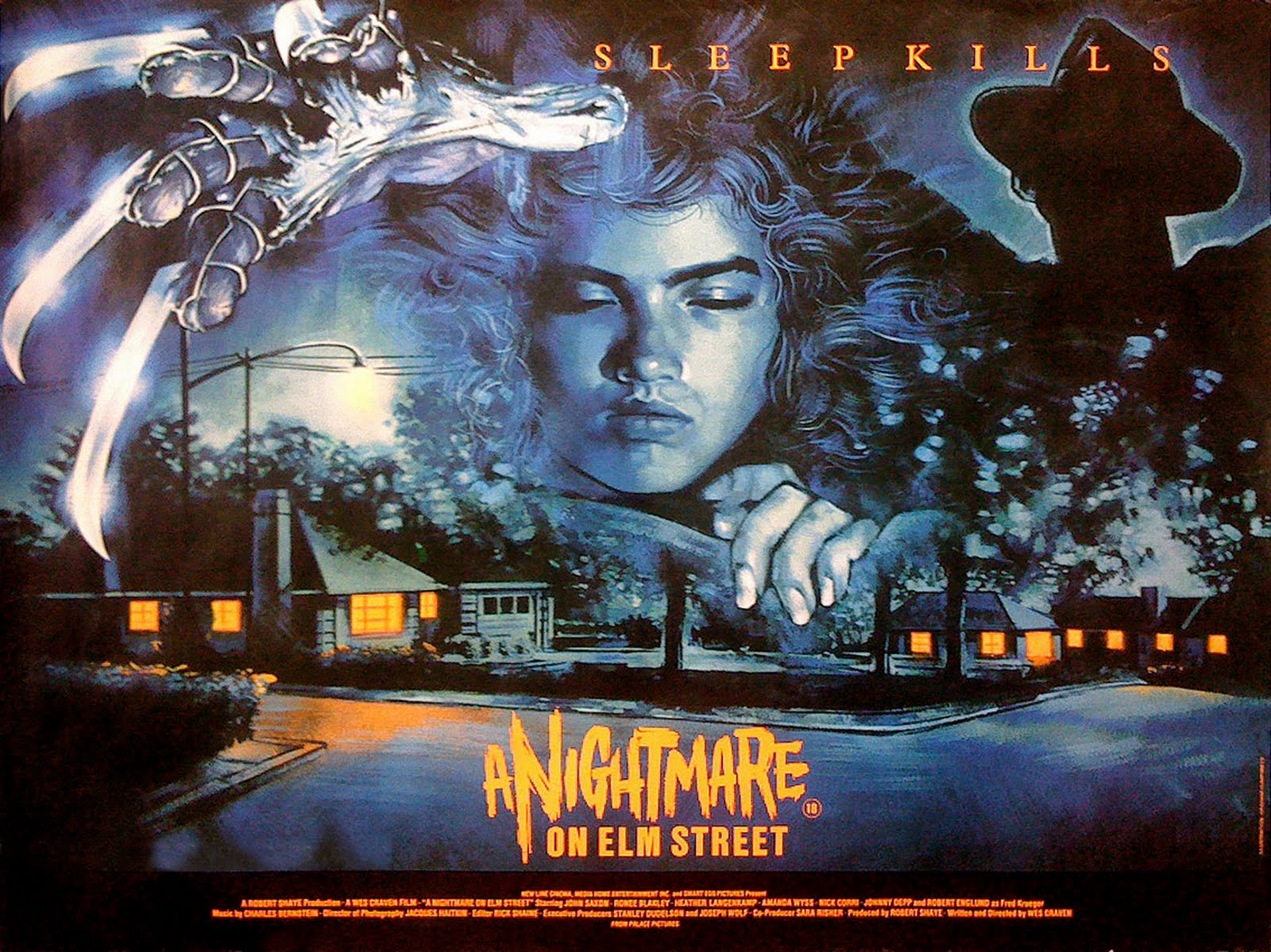
Best Villain: Wicked, frightening and unforgettable, Robert Englund's portrayal of the Elm Street killer turned Freddy into an instant horror icon. Featuring a dusty fedora hat, an old striped jumper and a glove fashioned with steak knives, Freddy haunts the dreams of Elm Street's teenagers. Out for revenge against the parents who burned him for his crimes, Freddy stalks the teens one by one, until only the brave Nancy (Heather Langenkamp) remains. The film does a great job of keeping Freddy's appearance a mystery, as we never get a clear look at his horribly disfigured face until the end. He says very little, but his creepy voice and unpredictability ensures Freddy remains scary throughout the film. His backstory is told be Nancy's mother, where she reveals Freddy was a child murderer, but got away on a technicality in court. By only telling and not showing us this, it leaves it up to the viewer to imagine just how horrible Freddy was before becoming the monster we see, which is makes for an even more unsettling atmosphere whenever he appears.

The remakes chooses a different angle, and one which feels far less effective in comparison. Freddy (now played by Jackie Earle Haley) is shown to have been a grounds-keeper at a school the teens attended as children. The film implies that Freddy wasn't a child killer, but instead a paedophile. A scary enough idea, but the rest of the film's approach to Freddy isn't up to the standards of the original. Freddy is shown in full detail mere minutes into the film, immediately removing all intrigued as to how he has been re-imagined for the new film. He also talks far too much (as was the case in the sequels to the original), and has a voice that sounds similar to Christian Bale's as Batman. He also repeats some of the wisecracks from the sequels, which is one of the things that transformed Freddy's character from an intimating figure to a joker. With the remake trying to go for a more serious approach akin to the original, including these lines feels out of place, and therefore lessens the effect of Freddy being scary. 

Winner: Original.

Best Lead: Nancy is our protagonist in both the original and remake. In the original, Nancy is a comforting friend to Tina (Amanda Wyss), who is suffering from nightmares. After Tina's death, Nancy becomes Freddy's next target, and she rises to the challenge and ultimately no longer fears him. There is a clear evolution of her character throughout the film, as she tries her best to tell her parents, but eventually realises she'll have to be brave and try and defeat Freddy herself. Heather Langenkamp is very charismatic and likeable in this role. She does a good job in playing both the innocent teen at the beginning of the film and the tough survivalist at the end. 

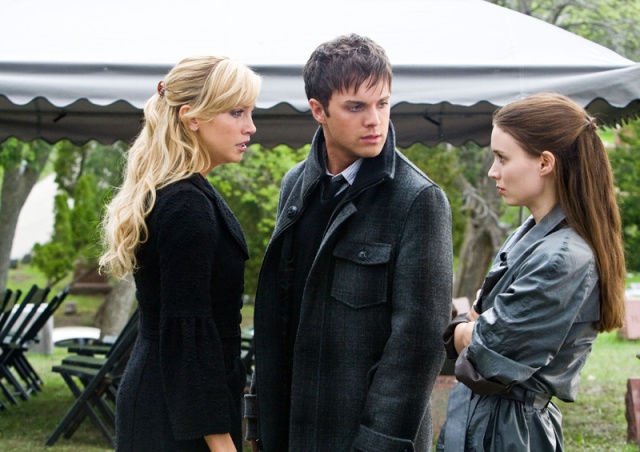
In the remake, Nancy is portrayed by Rooney Mara and, like Freddy, is vastly different to her 1984 counterpart. More socially awkward and lonely, Nancy has very little connection to the other characters. That is until she meets Quentin (Kyle Gallner), a boy also suffering from nightmares, and she forms a bond with him. Nancy is given more of a connection to Freddy in this film, having been abused by him as a child. This makes the confrontations between her and Freddy more personal, but there is little impact as the character is very downplayed. Nancy isn't very charismatic, so when she finally takes revenge on Freddy there is not a great deal of satisfaction. Seeing how she is the film's lead, this idea to have Nancy be a bit of a bore doesn't make for all that great a character, especially compared to the original.

Winner: Original.

Supporting Characters: Like the original Friday the 13th, A Nightmare on Elm Street's supporting cast had a future star amongst them. Here, it is Johnny Depp in one of his earliest roles playing Nancy's boyfriend Glen. Glen, whilst rather clumsy, helps Nancy in her struggle against Freddy even though he doesn't seem entirely sure about the whole thing. We also have the previously mentioned Tina, Freddy's first victim in the film, along with her boyfriend Rod (Nick Corri). All of these characters spend time with one another, and so their friendship plays a key role when Freddy begins his murder spree. After Tina's death, Rod is immediately suspected as the murderer, and their friendship is greatly tested. The performances are strong, and there is enough focus on their relationships to create an attachment to them. Nancy's parents Lt. Don Thompson (John Saxon) and Marge Thompson (Ronee Blakley) are also given plenty of interaction with Nancy. Though they have their flaws, they are good natured people, and so aid Nancy in whatever way they can.

The remake's supporting characters are all somewhat based or direct copies of the original's. Names are changed (Tina is now called Kris and Quentin is the male companion for Nancy instead of boyfriend Glen) and they don't share the close friendship bond. Instead, Jesse (Thomas Dekker, the remakes equivalent to Rod) uses the death of Kris' boyfriend in order to get back together with her. The makes him a very unsympathetic character, and so I didn't care when he was killed off. The fates of the original's characters are too heavily copied here, which makes the film very predictable. It was a surprise that Tina was killed off so early in the original as she looked like she was going to be the film's lead character. Here, Kris is the focus early on, and so we know that she won't last long, which makes the supporting characters in the remake overall less engaging.

Winner: Original.

Best Kills: After establishing characters, the logical next move for a slasher film is to start killing them off in various gruesome ways. The original Nightmare on Elm Street was one of the first slasher films to feature surreal and imaginative death scenes, with Freddy able to manipulate the teens' dreams to form horrific images. Tina's death is the most disturbing, with her being thrown against the walls and being slashed by Freddy, but with the audience never seeing Freddy himself. Then there's the famous scene when Glen falls asleep, and is killed by Freddy by being dragged through the bed. The next thing we see is a cascade of blood firing out of the bed, much to the shock of Glen's parents. Visually disturbing and endlessly surprising, the kills in the original film broke new ground for slasher films, and are still some of the best moments in the entire Nightmare on Elm Street franchise.

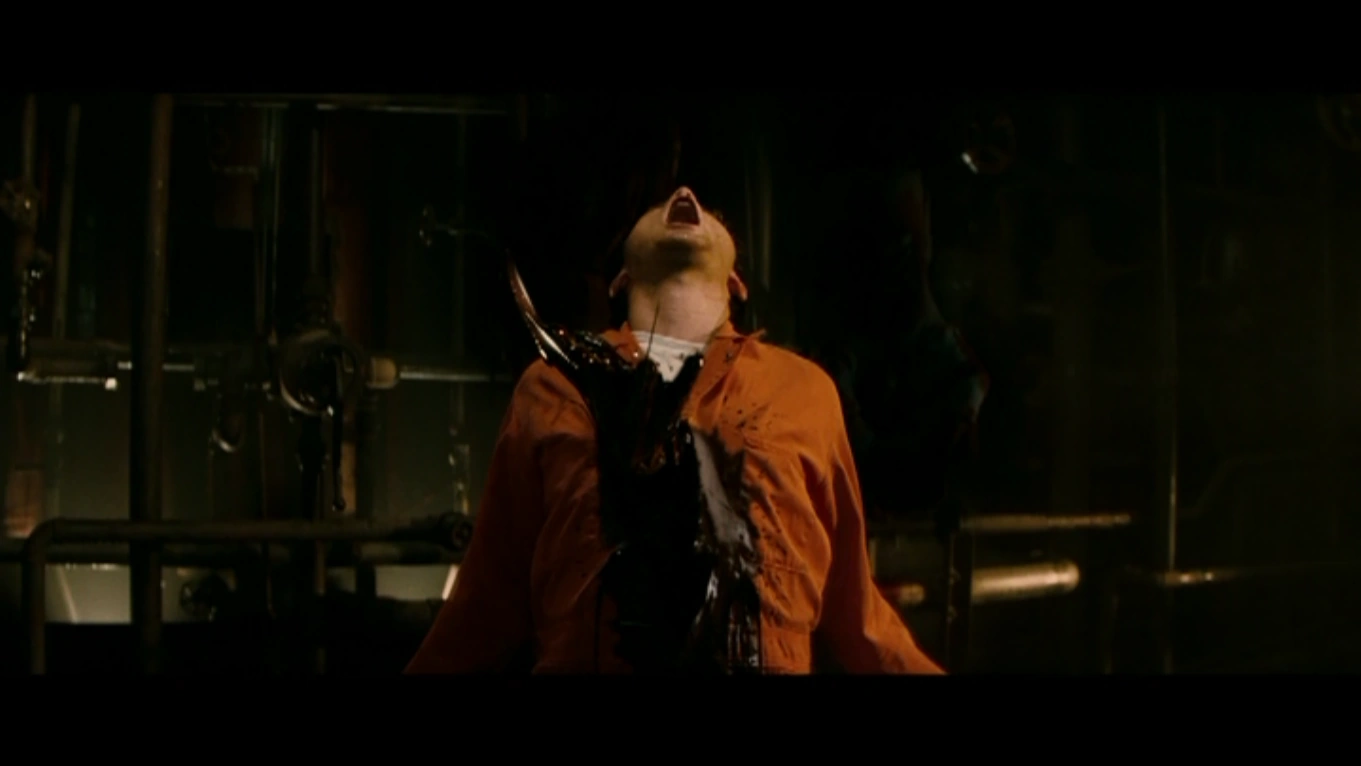
Like with the supporting characters, the kills in the remake are direct copies of the original, with a few exceptions. Kris' death is exactly the same as Tina's, though less horrific due to its predictability. The other deaths are surprisingly dull, with Freddy appearing just to quickly slash his way through his victims. There is little atmosphere when this happens, and so the kills cease to be frightening. Only one of the deaths is notably violent, but it happens right at the end and again follows the character formula from the original. With a lack of new ideas and not putting a unique enough twist on the copied kills, this is one of the easiest categories to decide a winner for.

Winner: Original.

Best Story: Whilst having a fairly simple story, the original Nightmare on Elm Street has a good amount of depth to it. Freddy's motive for killing the teenagers is to get revenge on the parents that killed him. Freddy's murder is kept a secret by the parents, which causes friction when Nancy learns the truth. For a film where gruesome murders are at the forefront of the story, its good to have believable drama between the human characters as we can then sympathise with them and hope they survive by the end of the film. Keeping Freddy's appearance a mystery until later on is a smart move, as he appears more frightening when we can't see clearly what he looks like. There are also strong creative choices on how the dreams are depicted, with it never being clear if the teens are awake or asleep, and with them able to bring things from their dreams into the real world. The film devotes much of its time to the characters, which means that Freddy remains mysterious and allows plenty of build up to his appearances throughout the film.


Though echoing  the original in most aspects, the remake tells the story of A Nightmare on Elm Street very differently. Much of the film deals with the origins of Freddy and his link to the Elm Street teenagers, something that was explored in part six of the original series. This, combined with not developing the teen characters, makes the drama very unbalanced. We know more about Freddy than we do any other character, and so can't connect to the others in a way that makes us feel anything when they are killed off. I appreciated the direction of changing the backstory slightly, as it suggests a fresh approach to the series, but the overall pacing of the film is a mess. There is also a very anti-climatic showdown with Freddy, especially compared to how the original handled the climax. Here, instead of Nancy learning to no longer be afraid of Freddy (thus taking away his powers), Nancy brings Freddy into to the real world and sets him on fire after slashing his throat. A far less interesting and meaningful resolve, and one which only cements which film not only tells the story better, but which is the superior film in every aspect.

Winner: Original.

Overall Winner: A Nightmare on Elm Street (1984).

Wednesday, 2 September 2015

Wes Craven (1939-2015): A Tribute to a Horror Film Legend.


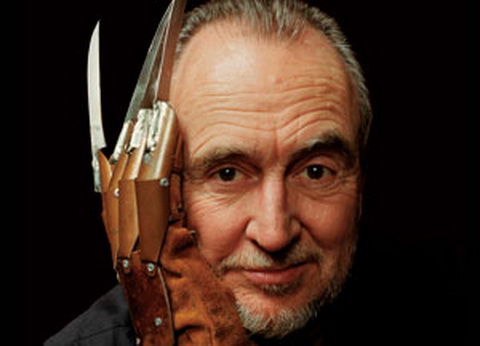
Chances are if you were a kid growing up in the 1980's, then you probably heard all about Freddy Krueger, the antagonist of the Nightmare on Elm Street films. If you saw those films at young age, no doubt you suffered nightmares about him just as the characters in the film do, and that's largely thanks to the man that created the phenomenon: writer and director Wes Craven. Before scaring audiences senseless with the original Nightmare on Elm Street in 1984, Craven had already made a name for him self in horror cinema with cult classics The Last House on the Left (1972) and The Hills Have Eyes (1977). Recently, he sadly passed away as a result of brain cancer, so I'm dedicating this post to the horror maestro, celebrating his talent and legacy.

I consider Craven's most popular film, A Nightmare on Elm Street, a horror masterpiece and one of my all time favourites. With this film, Craven gave the slasher sub-genre a new edge, bringing in more surreal visuals and upping the gore, eclipsing standard setters Halloween (1978) and Friday the 13th (1980). Not only did Craven help to establish this extra gear for the genre, but in the process introduce one of cinema's most iconic villains: Freddy Krueger. In the original film Freddy is at his scariest, as Craven allows Robert Englund's fantastic performance to shine without focusing on wisecrack dialogue, which would feature heavily in the sequels. The Nightmare on Elm Street series was undeniably better off with Craven attached, with him writing and directing the original, writing the fan-favourite third instalment, Dream Warriors (1987), or reinventing the franchise with New Nightmare (1994). In New Nightmare, Craven ingeniously brought Freddy back to his more serious routes whilst also paying tribute to the campiness of the sequels by setting the film in the real world, with Robert Englund playing both himself and the new Freddy. In the film, the cast of the franchise are terrorised by Freddy, and soon the exact events of the original film start to happen. Shortly after returning the series to form and yet again giving the slasher genre a new depth, Craven decided to further utilise this idea to honour and parody the genre with the Scream films.

Craven revitalised the slasher genre's popularity in the 1990's with Scream. Unlike other horror films, the characters in Scream are all aware of the horror clichés, and so there's a good amount of humour present as well as scares. Though I think Scream should have been a standalone film, its popularity ensured three sequels carried on the story. In the original 1996 film, a high schooler is murdered by a masked man whom had made threatening phone calls to her. With the whole town unnerved, a group of teens are all under suspicion of being the killer, and all hell breaks loose at a party. If you haven't seen the film, I won't spoil it, it's certainly worth checking out for fans of slasher films, and even a casual horror viewer should be entertained by it. The sequels delve even further into genre clichés, but they can't match the original's twists and turns. Craven knew exactly what to deliver at exactly the right time, cementing his reputation as a master of horror cinema.

Through his creative ideas and slick execution of them, Wes Craven is truly one of the finest contributors to the horror genre. His undeniable talent has ensured the survival of the horror genre's popularity more than once, and for that we should be eternally grateful. Wes, thank you for the nightmares!