Wednesday, 14 December 2016

Doctor Strange (2016) Review


"I learned to tap into powers I never knew existed" - Dr. Stephen Strange


"Less superpowers, more magic" declares 2016, as we move into the final phase of blockbusters for the year. With Fantastic Beasts and Where to Find Them serving as a prequel to the magical Harry Potter series and a new entry in the Star Wars universe set to dominate the box-office, Marvel Studios have decided to join in the fun with their most popular sorcerer making his big screen debut. Doctor Strange is the latest entry in the ever-growing Marvel Cinematic Universe, and is the first film since 2014's Guardians of the Galaxy to not be a sequel. 

The film follows renowned surgeon Stephen Strange (Benedict Cumberbatch) living his ideal lifestyle, surrounded by wealth and awards. However, after a horrendous car accident, Stephen's body is damaged to the point where his hands will never be able to replicate his previous skills. Becoming a bitter and lonesome individual, he finally seeks aid in Nepal from a sorceress known as the Ancient One (Tilda Swinton). The Ancient One, along with sorcerers Mordo (Chiwetel Ejiofor) and Wong (Benedict Wong), teaches Stephen their magical ways, including travelling through various dimensions. This brings Stephen into contact with the sinister Kaecillius (Mads Mikkelsen) and his cohorts, former students of the Ancient One, who plan to conjure an entity known as Dormammu to engulf the Earth.

The film's greatest strength is Cumberbatch. As we witness Stephen's evolution of having everything, then nothing, and then more than he could possibly imagine, it is Cumberbatch who draws us in with his commanding performance. He manages to portray the many stages of Stephen's life with complete believably. Never once did I feel he wasn't the fantastic surgeon, the hateful loner, or the all powerful sorcerer. Despite being surrounded by special effects and other high-profile actors, Cumberbatch is the film. So the film boasts perhaps Marvel's most engaging hero to date, but it sadly continues their trend of utterly forgettable villains. Kaecillius is an ex student to the Ancient One who has turned evil (not the most original idea). He is given no personal connection to Stephen and actually says very little throughout the film. Like Christopher Eccleston before him, we have a fantastic actor in Mads Mikkelsen completely underused in a role that seems tailor-made for him. Eccleston's dramatic weight was perfect for the role of Malakith in 2013's Thor: The Dark World, and after playing Bond villain Le Chiffre in Casino Royale (2006) and Hannibal Lecter on television, Mikkelsen is exactly who you want to see be a villain in a superhero film. This is one aspect the MCU desperately needs to improve upon, especially when tackling more famous villains, such as the Vulture in next year's Spiderman film.


The other characters are OK, but nothing special. The Ancient One is certainly the next most important character behind Stephen, as she epitomises the supernatural elements of the story. Despite the Ancient One being older than the other characters can comprehend, she is given a well-grounded performance by Tilda Swinton, who works as a good opposite to Stephen as he begins to learn about magic and the other dimensions. Rachel McAdams plays former lover Christine Palmer, who at first appears as though she will play a main part in the story as she personally knows Stephen better than any other character. However, she is actually given very little to do, disappearing from the film as Stephen learns of his new powers only to show up again all of a sudden. Her reaction to Stephen's new abilities is also a little odd. She barely flinches at seeing him in his astro-form, and then later on doubts him when he mentions he gets around via creating portals. Wong and Mordo aren't given much character, and so I didn't find myself caring for them nearly as much as the film wanted me to. They're not bad characters by any means, but they don't leave much of an impression.

The film also appears to obviously borrow from other blockbusters in terms of plot and visuals. The special effects when the characters enter an alternate dimension which allows buildings to be moved are instantly recognisable from Christopher Nolan's Inception (2010). Whilst impressive, having almost the exact same look is a bit of a distraction and isn't as powerful as intended. The film's climax is exactly the same as another Marvel film: Fantastic Four: Rise of the Silver Surfer (2007), which I thought was a bit strange considering that film isn't generally held in high regard, and yet it is mirrored here in Doctor Strange. An ancient being attempts to consume the earth and the hero must enter the void of destruction and confront his gargantuan foe face to face in order to stop him. The character of Silver Surfer confronts Galactus this way, and so does Doctor Strange with Dormammu in this film. It's something we've seen done before, and with the film's license to be as wild and imaginative as possible, this seemed a pretty cheap climax.

Despite a few minor gripes, Doctor Strange is at least a consistently fun film. Less downbeat than Captain America: Civil War (2016) and taking a more humorous approach similar to Guardians of the Galaxy is a welcome choice. Cumberbatch is no doubt the highlight, but it does also have some cool action sequences and a decent pace to keep interest. It also knows not to over-stay its welcome, clocking in at around two hours, whereas every other MCU film seems to want to stretch itself over the two and half hour mark. It would be a lie to say that you'd really be missing out on something amazing if you chose not to see it, but for what it is, it achieves its goal of being a fun little adventure with a likeable cast. Not spectacular, but not bad either. 

Monday, 7 November 2016

FIFA 17 - The Journey Review


Here's something of a cinematic experience (and a medium that I never planned to write much about) - FIFA 17's The Journey. Whilst I don't write about games or that industry (aside from a Bioshock post a while back). I thought it would be interesting to include my thoughts on FIFA 17's cinematic (and supposedly authentic) new game mode.

In The Journey the player stars as Alex Hunter, a 17 year old who dreams of following in his granddad's footsteps as a professional footballer. He is naturally talented, and is offered a contract with a Premier League club of the player's choosing, alongside his equally gifted childhood friend Gareth Walker. Upon turning professional, Alex faces the struggles of impressing his coaches, being in the spotlight, and even being sent out on loan to a Championship club. Eventually given another shot, Alex must lead his team to Premier League and Cup glory to solidify his legacy as the hottest young talent in football.

As well as how well he performs on the pitch and in training, the player can decide Alex's personality. This is achieved through having a choice of three pieces of dialogue during cut-scenes: a cool response, a neutral response, and a fiery response. A cool response will make Alex come across as a saint, and will earn him respect from the manager. A neutral response gives Alex an "everyday guy" personality, which will still earn him credibility to the manager, but maybe not as much as choosing the cool option. Fiery is when things get interesting. Alex will become self-centred and aggressive, much to the displeasure of his coaches. However, a fiery personality means more social media followers for Alex, and this in turn means more opportunities to be sponsored by big brands. I greatly enjoyed balancing the cool and fiery responses throughout my time playing, with the fiery choices often being the most amusing. My particular favourite was when we lost a match and the team is talking about how the fans deserve better. I made Alex's response to this conversation be "does it really look like I care?", which was all that was needed to finally get that lucrative sponsorship deal!


Given how matches take place once a week (with exceptions to cup games), you'll find yourself playing regular training drills in order to boost your stats. I found this to be a bit tiresome, but the game forces you to complete these training drills to a consistently high standard, else you risk losing your place in the team. Even so, repeating the same drills over and over again means that my investment waned, and was crying out for an amusing cut-scene to grab my attention. This is what I would say is The Journey's biggest problem: keeping interest in the story and game play when there is so much training throughout. To have to do it after every match kills the games pacing, meaning that I completed a relatively short story mode in small stages. I'm sure this is an area that will be improved should there be an interactive story mode produced for the next FIFA, with The Journey serving as a learning curve as to what works and what doesn't.

The story itself is good for the most part. Having consulted rising stars such as Marcus Rashford, The Journey aims to provide an authentic experience of a young player's sudden emergence on the Premier League scene. There are some pantomime like moments though, especially when the story focuses on Alex's friendship with Gareth Walker. After being sent on loan, Alex notices Gareth becomes more and more cocky, eventually joining another team for big money upon Alex's return. As I chose to play a Manchester United career, Walker ends up joining local rivals Liverpool, and the two ex-teammates are reunited as opponents not long after. So the drama is a tad exaggerated, but at least it's entertaining, and makes the player more determined to have Alex score against Walker's new team.

Being that I don't review games, I was eager to see how cinematic elements were tackled in The Journey, and for the most part, they hold up. The performances are nice (with cameos from the likes of Harry Kane and James Rodriguez), and the dialogue wheel allows the story and characters to take any number of directions. The repetitive nature of the training wears thin, but I was always eager to see what happened next story-wise. The addition of newly recorded commentary specifically for the game mode is also a nice touch. Whether FIFA will continue to explore story-modes like The Journey is unknown, but if it only serves a one-off thing, you could certainly do worse.

Wednesday, 21 September 2016

Anthropoid (2016) Review


"Assassinate... murder implies he had a life worth living"  - Josef.


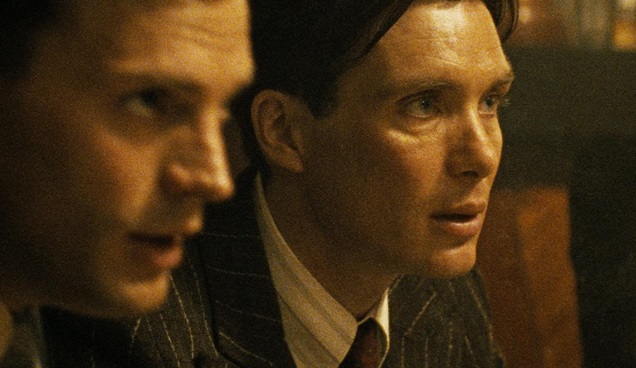
The summer blockbuster season is over, and so the cinemas are no longer full of special effects and action packed fantasies. On a comedown from the melee of superhero smackdowns, September is usually considered a "dead" month for cinema. Anthropoid, however, is a clear standout in this month's offerings for both its premise and cast, featuring Cillian Murphy and Jamie Dornan as two Czechoslovakian soldiers. Their mission: to assassinate SS General Reinhard Heydrich in the midst of the Nazi's rule on their country.

The first half of the film is all character development, with us introduced to Josef (Murphy) and Jan (Dornan) as they make their way to Prague to meet with the resistance. Acting as civilians, we see them go through the struggles of maintaining a low-profile, with Jan's emotions getting the better of him in various situations. This is made all the worse when he and Josef hide out with the Moravec family, allies of the resistance. Jan quickly becomes attached to Marie (Charlotte Le Bon) and, despite his initial concerns towards Jan's actions, Josef slowly forms feelings for Anna's friend Lenka (Anna Geislerova). Now also concerned with the safety of the women they love, Josef and Jan must carry out their assassination sooner then expected, with Heydrich expected to be transferred. From this point on, the film's tension builds to an emotionally draining final confrontation between the remaining resistance fighters and the Nazis, in what is surely one of the best shootouts committed to film.

Continuing his excellent run of work in 2016, and the film's standout performer, is Cillian Murphy. After an incredible third season of hit drama Peaky Blinders, Murphy abandons the cold exterior of gangster Tommy Shelby and brings warmth to his portrayal of Josef. He lights up the screen throughout, even when he has no dialogue. A particularly poignant moment is when Jan tells the family and Josef that Marie has agreed to marry him, and Murphy is able to capture the happiness he feels for his friend as well as his concern for him not being focused on the mission in a single look. A masterclass in subtlety. Jamie Dornan is also believable in his role as the slightly unhinged Jan, easily breaking away from his best known role as Christian Grey in the Fifty Shades of Grey series. As events unfold, Murphy and Dornan's chemistry grows as we explore how Jan slowly becomes more like Josef. Instead of panicking at the thought of death like in an earlier scene, Jan uses the calming techniques Josef taught him to help other members of the resistance during the final battle. This continues the emotional investment the audience feels in a very effective way, as we learn that the mission would be nothing without the loyalty and compassion of the two soldiers.


Of course, the climatic shootout between the resistance and the Nazis has to be mentioned, as it is one of the most gripping sequences of violence in recent memory. Instead of going for the jugular and focusing on cathartic, gory violence, Anthropoid keeps the blood to a minimum, instead focusing on the distress of the resistance fighters and the sheer number of Nazis that are coming for them. There's no fancy editing or over-the-top music, just the prominent sound of gunfire and agonising screams. It really drives home the horror of such acts, and builds to a profound ending where the Nazis attempt to drown the remaining fighters. With seemingly no escape, the sound completely cuts out, and we are forced to experience the desperate struggle with our eyes only. After this sequence, you could hear a pin drop in the screening I was in, and it's something I've continued to think about ever since.

There are other sequences of violence in the film, some of which are very distressing. The Nazi's torture of a young man is shown in some detail, and is made all the more disturbing by the fact that the scene was filmed in a real Nazi torture chamber. Thankfully, the film does not linger too much on these sequences, as the focus is on Josef and Jan. I feel it is important to show these scenes, as the film does not want to shy away from the horrible acts human beings can commit when they believe they are in the right. However, it is still a tough watch and not recommended for any viewer easily disturbed by violence in cinema. 

One minor complaint would be the romance. Don't get me wrong, it isn't portrayed badly, but I just don't feel the focus it gets adds a great deal more drama to a film with an already powerful premise. Certainly not on Josef's side of things, as he is shown to keep Jan on the straight and narrow when he becomes serious with Marie. It seems a little odd that a man with complete focus on the mission would all of a sudden become as dedicated as Jan to romance. Whilst it doesn't necessarily take away any of the film's tension, it didn't add a great deal of weight to it either. I'm not aware as to how big a part Josef's relationship with Lenka effected his actions in real life, but in this film's portrayal it doesn't really come to much. 

Similarly thought-provoking as 2002's The Pianist, Anthropoid is a powerful piece of cinema. Boasting excellent performances, particularly that of Cillian Murphy, it's portrayal of a significant moment in the history of the Second World War is an intense and emotional ride. Leading up to one of the best climaxes in terms of tension, cinematography and adrenaline, it is best experienced on the big screen. From beginning to end, it keeps you glued to the screen, and will have you thinking about what you have just witnessed for many days afterwards. If you can handle the disturbing violence, make sure you head down to your local cinema and support well acted, written and directed works of art such as Anthropoid. You won't be disappointed.

Wednesday, 31 August 2016

What's next for "Shared Universe" Films?


Shared Universe franchises are all the rage nowadays. The Marvel Cinematic Universe is the highest-grossing franchise of all time, and it now seems every other studio is aiming to replicate that success. With both Marvel and DC set to release more entries into their respective franchises, there appears to be no stopping the superhero juggernaut which has dominated the box-office for years. But who else is set to get the ball rolling for their own multi-film franchises and, more importantly, will audiences stick around long enough for them to be successful?

Perhaps unbeknown to audiences, a brand new Shared Universe series was started in 2014, with Legendary Picture's release of Godzilla, directed by Gareth Edwards. Eventually, the rumours of a new Shared Universe was confirmed, with a Godzilla sequel, standalone King Kong film and an eventual crossover pitting the two monsters against one-another all confirmed to be released within the next few years. The idea of remaking King Kong is old hat, with the 1933 original re-imagined in 1976 and 2005. The combination of King Kong and Godzilla is also nothing new, with the two monsters meeting in 1963's Japanese produced crossover. Over fifty years have passed, and to me this remake is way overdue. Despite the fact it will greatly contrast the original film with its superior special effects, audience's seeming dislike of "vs." films will surely work against it. It will no doubt boast huge spectacle and action, but its success will ultimately come down to whether audiences are engrossed enough in this franchise after another Godzilla film and King Kong film. If the upcoming Kong: Skull Island is too similar to 2014's Godzilla, enthusiasm for the big showdown (set for a 2020 release) will drop. As Batman v Superman: Dawn of Justice and Suicide Squad have proved this year, critical reception means nothing for Shared Universe films compared to the amount of money they can generate for the studio, and the Godzilla-Kong franchise will have stiff competition from Marvel's dominance of the summer blockbuster season.


Disney's upcoming Star Wars films look to be creating a Shared Universe as well. With the new prequel film, Rogue One, the series could reintroduce previously unseen characters into the sequels to 2015's Episode VII, creating a much larger universe across each new film. Money should be no obstacle for the sequels, given the enormous success of Episode VII. However, an abundance of prequels may become tiring, especially how there already exists a prequel trilogy and a Han Solo origin film has been green-lit. After 10 years absence until Episode VII was released, audiences were quick to make the latest Star Wars film one of the most successful, and so I don't think the plethora of Star Wars sequels will be seen as being as "tiresome" as the next lot of Marvel and DC films.


One genre which I feel could start its own Shared Universe within the next few years is the horror genre. With recent remakes of Frankenstein and Dracula, the opportunity to combine those famous characters may have passed, but who's to say another crossover following in the footsteps of Freddy vs. Jason won't happen soon? If it were to happen, it could possibly involve remaking classic horror cinema that hasn't been re-imagined for contemporary audiences, such as 1987's Hellraiser. What matters is whether the films can remain scary and bring something new to the table, something in which recent horror remakes have severely lacked. Whilst I don't think a horror Shared Universe would be anywhere near as successful as Marvel, DC, Godzilla and Star Wars, it would provide a more radical alternative to the growing list of Shared Universe franchises.

With Marvel's Doctor Strange and Star Wars' Rogue One to see out the year, 2017 could prove to be the defining year for Shared Universe films. Will audiences flock to the cinema to see yet another Spiderman remake? Will Kong: Skull Island be able to match the success of Godzilla? Can DC win back the critics with Wonder Woman and Justice League? All will be revealed in what will be another year packed with these types of films, and I'll be sure to review some of them upon release.

Saturday, 13 August 2016

Suicide Squad (2016) Review


"Oh, I'm not gonna kill you... I'm just gonna hurt you really, really bad." - The Joker.


Months after the critical failure of Batman v Superman: Dawn of Justice, DC's next instalment in their cinematic universe seemed destined to follow in its footsteps. From the tone set by the first trailer, it looked like it took itself too seriously and had all the grimness that made BvS unengaging. DC, not wanting another high-profile flop on their hands, responded to this by re-shooting scenes with more humour injected, as well as two new trailers featuring "Bohemian Rhapsody" and "Ballroom Blitz", giving the film a more colourful and fun look. Still, critics have bashed this film just as much as BvS. A fair amount of fans however, seem to view Suicide Squad as an clear improvement. Having recently seen the film for myself, my initial thoughts fall somewhere between the two, but with a more positive overall feeling.

Taking place after the death of Superman, intelligence operative Amanda Waller (Viola Davis) decides to fight fire with fire, assembling a team of imprisoned supervillains as a "suicide squad" to carry out highly dangerous missions for the government. This rag-tag group includes expert marksman Deadshot (Will Smith), the crazy Harley Quinn (Margot Robbie), infamous thief Captain Boomerang (Jai Courtney), the now pacifistic El Diablo (Jay Hernandez) and cannibalistic Killer Croc (Adewale Akinnuoye-Agbaje). Led by special forces agent Rick Flag (Joel Kinnaman), the squad is deployed when a mystical being know as Enchantress (Cara Delevingne) rebels against her captivity by the government. With Enchantress intent on wrecking havoc on humanity, the squad must stop her and weave their way past her forces, as well as Harley's psychopathic boyfriend the Joker (Jared Leto), in order to prove that even the "worst of the worst" can do some good.

The plot has received a fair amount of criticism, with the idea that focusing on a rescue mission for the majority of the film's running time is nothing new. Whilst it isn't the most original idea, it allows there to be more focus on the characters and their abilities. Again, this isn't the best writing for supervillain characters you'll see, but they are at least memorable and are given a decent amount of backstory. Deadshot and Harley Quinn are given the majority of backstory, and they both push the other members of the squad to the side with their quips and chemistry with one another. That isn't to say the others don't get their moment to shine, but they don't drive the plot forward as much as Deadshot and Harley. At least all the performances are of a good standard, which is by far the film's greatest strength. Margot Robbie steals the film as Harley Quinn, and I couldn't imagine another actress playing this role after seeing her performance. Will Smith adds his usual coolness to Deadshot, which is more than welcome in a film featuring so many super-powered characters. I also liked Cara Delevingne's split-personality portrayal of Enchantress, which adds a more emotional edge to the story, with Rick Flag's relationship with Enchantress' alter-ego June pushed to breaking point by her evil scheme. 


One the most anticipated characters was Jared Leto's Joker, making his first cinematic appearance since 2008's The Dark Knight. After two fantastic portrayals by Jack Nicholson and Heath Ledger, Leto had an awful lot to live up to. He gives a strong performance here, but as the Joker isn't really a main part of the story I don't think I can form a full opinion on his portrayal of the character until I see more of him. The new design was met with a mixed reception, but I felt it worked for the new direction of the Joker being more of a gangster. He has tattoos, jewellery and plated teeth, giving him a modernised look that we haven't seen before. I knew he wasn't in the film too long, but he was in it more than I expected, and all of his scenes with Harley certainly had the feel of a comic book brought to life. I look forward to seeing Leto expand his performance in the franchise's next instalments.

There are some things that bugged me, such as the use of pop songs throughout the first act. For starters, it feels like a rehashed idea for a film featuring a team of comic book characters, as Guardians of the Galaxy already did this to great effect two years ago. Whilst the songs in that film worked, only a few of them do in Suicide Squad. The film opens with "House of the Rising Sun" by The Animals, perfectly setting the tone and atmosphere. With its haunting guitar and keyboard, the song is an appropriate companion for the villains, just as the use of The Rolling Stones' "Sympathy for the Devil" is the perfect song for the headstrong Amanda Waller. However, the use of Black Sabbath's "Paranoid" had me scratching my head, as well as the absence of pop music in the film's second act. The film keeps its fast-paced, fun vibe throughout with plenty of action and character banter, so the absence of the pop tunes is all too obvious. If the filmmakers where adamant they wanted to have pop tunes accompany and reflect the characters, why leave them out in the second act? There's also some choppy editing in places, especially in some of the action sequences. This is a particular pet peeve of mine, as I like to be able to see the choreography and hard work that goes into making them, especially when the film appears to champion a practical approach. The last fight with Enchantress suffers from this, as well as some fairly murky lighting, adding to the confusion.

Suicide Squad is far from perfect, but it's nowhere near as bad as critics are making it out to be. It might not be the most original idea (and the industry is definitely suffering from "superhero fatigue"), but of the other three comic book films I've seen in cinemas this year, this was by far the most enjoyable. The re-shoots have certainly improved what looked like another grim entry in the DC Extended Universe, and by not obsessing over setting up sequels, can be enjoyed as a standalone film. Had it not been released in the year when it finally seems critics are giving up on superhero films, I don't think it would be getting anywhere near the amount of flack its received so far. It boasts a talented cast that delivers on all fronts, and there's never a dull moment. The editing in some scenes and so-so soundtrack moments did not deter the experience of a fun little adventure. Fans seem more pleased with it than critics, but even if your not a fan of comic book films, you still may find enough to enjoy in Suicide Squad than you would in most films in this genre. 

Side note: My opinion on the whole "shut down Rotten Tomatoes" thing is that it's both childish and ridiculous. If you disagree with the critics' opinion on Suicide Squad (like I do), or any other film for that matter, express why you think they're wrong and what you enjoyed about the film. Requesting a critical website that viewed a film you enjoyed in a negative light to be shut down is plain silly, as there are plenty of websites that allow you to express what you love about the films you enjoy. 

Saturday, 30 July 2016

Thoughts on BvS Ultimate Edition


With Suicide Squad soon to be released, I thought I'd offer another look at DC's previous film, Batman v Superman: Dawn of Justice. However, what I want to focus on is the new version of the film (the "Ultimate Edition), which extends the film's running time to three hours. I reviewed the theatrical release earlier this year and stated how I felt it was a disappointing mess, so how does this new, R rated version stack up against it?

One of my main gripes with the theatrical release was how imbalanced the motivations of Batman and Superman were. There are clear enough reasons why Batman hates Superman, but the film never dedicated enough time as to why Superman should hate Batman. In the Ultimate Edition, the balance is restored somewhat by having more scenes of Superman (as Clark Kent) investigating Batman's "reign of terror" in Gotham. Two new scenes help to show how Batman's brand of justice has effected the residents of the city, with Clark even meeting the partner and child of one of Batman's victims. She warns Clark that Batman cannot be reasoned with, and that the only way to stop him is "with a fist". We see the influence this has on Superman when he confronts Batman towards the end, as he quickly turns to violence after failing to negotiate with him. Had this been expanded on further throughout the film as the reason why the two heroes end up battling, it would have made for a more satisfying altercation, as there would be genuine motivation for both characters to confront one another. Like in the theatrical release, however, Superman only engages Batman in a fight because Lex Luthor threatens to kill his mother, which is a much weaker idea than having them fight over a clash of morals and principle.

There is also more of a focus on Lex's plan to frame Superman, which in turn makes Lois Lane's role in the film bigger. Whilst these new scenes help to shed some light on how Lex has staged these events, the plan is still a confusing mess, and I was still scratching my head has to what his ultimate goal is. I was happy to see more time devoted to developing the story, but it any improvements over the theatrical version in this area are moderate. This, along with the Clark Kent investigation scenes, is where the majority of the new scenes are included, which is an overall wise decision as they where the two weakest aspects of the the original cut.

As far as action, there's not a lot of new stuff included. The main conflict between Batman and Superman has the odd extra punch thrown in, but that's about it. Thankfully, I'm pretty sure no new footage of the battle with Doomsday is included, as that scene dragged on and on in the original cut. With the new R rating, I was expecting a more drastic change in the violence presented in the film. I don't think having the film be more bloody would be an improvement (the film has to also appeal to young fans as well), but I still felt cheated given how the change in rating is so drastic. The scene where Batman takes down a room of thugs (arguably the best scene in the film) has some blood added in and an implied moment of Batman either killing or severely wounding one thug who stabbed him in the shoulder. This is the only instance where the violence feels a lot more adult The other action sequences, particularly the one at the end, still feel like standard superhero stuff.

I'm at a loss as to whether this new cut of the film greatly improves on the theatrical release. On the one hand, we get to see some of the better ideas that were not included which helps to make the confusing plot slightly more coherent. On the other hand, these added scenes tease us with "what could have been" had they been more significant, rather than having them lead into the disappointing motivations of the characters we saw in the theatrical release. I can't say I recommend it, but it at least means we get to see the complete version of the film. I'd much rather see what Zack Snyder fully intended us to see (even if it still isn't good) than a chopped up mess that was seen as either too long or too violent by censors.

Sunday, 3 July 2016

Manchester United: The Five Weirdest Louis van Gaal Tactics/Decisions


And now for something completely different. Rather than a film review, I thought some fresh content about one of my other interests would change things up a bit. One thing most people know about me is that I supported Manchester United Football Club, and I am greatly anticipating the upcoming season under new manager Jose Mourinho. Whilst looking back at the previous campaigns, which were by in large disappointing, it got me thinking about all the strange occurrences we endured under the management of Louis van Gaal. Off the pitch, van Gaal was known for his amusing quips and on again/off again relationship with the press. The happenings on the pitch were equally up and down, with us winning the FA Cup this year, but failing to qualify for next season's Champions League. I've thought long and hard about the moments on and off the pitch that left me most puzzled by this unique individual, and in no particular order, here are the top five:

5. Phil Jones taking corner kicks
A phrase that became something of a summary of van Gaal's approach, this was one of the most unpredictable (and unwanted) tactics in the two seasons under the Dutchman. With plenty of talented players good enough to deliver a decent corner kick, van Gaal opted for defender Phil Jones, a player with little-to-no experience of delivering at set piece situations. Whether this was an attempt simply to puzzle the opposition or he genuinely believed he had finally found the right man to take corner kicks remains a mystery. Needless to say, the decision didn't last long, and fellow Dutchman Daley Blind was appointed to deliver corner kicks for the whole of the 2015/16 season.

4. Selling Robin van Persie and Javier Hernandez in the same transfer window
Whilst perhaps not the strangest decision, this is the one that angered me the most, as these two were my favourite United players. In the summer of 2015, Javier Hernandez returned to United after a season-long loan at Real Madrid, adding to our striker options after we had decided not to purchase loanee Radamel Falcao on a permanent basis. During this time, Robin van Persie was sold to Turkish club Fenebahce after suffering his weakest season at United, scoring only 10 goals in all competitions. Whilst I was sad to see him leave, I was pleased to see Hernandez get another chance in the team, making substitute appearances against Newcastle and Club Brugge. After missing a penalty kick against Brugge, Hernandez was almost instantly sold to Bayer Leverkusen, where he scored 26 goals in all competitions. To further rub salt in the wound, van Persie rediscovered his scoring touch (despite not appearing as regularly as he perhaps would have wanted), netting 20 goals.

3. Angel Di Maria = Striker?
United broke the British transfer record when exciting playmaker Angel Di Maria joined for £59.7million. Primarily a winger or centre-mid, Van Gaal decided that the best way to utilise this talent was to play him up-front, making Di Maria ineffective in any game he played in that position. Di Maria lost confidence and finished his first season at the club with 4 goals in all competitions. His United career came to a swift end upon refusing to join up with the team on a pre-season tour of the United States, and he was sold to Paris Saint-Germain soon after.

2. Super-sub Nick Powell
After a dismal display in the 2015/16 Champions League group stage, United had to deliver a massive performance in Germany against VfL Wolfsburg in their final match. It was a must win situation, and the game was a crazy affair, with United taking the lead only to eventually concede 3 goals, with the game finishing 3-2. In this must-win game, van Gaal gambled on youngster Nick Powell (who had only scored one goal for the club and was continuously sent on loan throughout his United career), replacing Juan Mata towards the end of the match. Whether Powell actually touched the ball in the game is lost on me and, to the surprise of everyone except van Gaal, he made no impact in the game. Such was the difficulty of Powell finding a place in the first team, that he was released by United upon expiry of his contract. 

1. Miss a penalty, back of the queue
If there's one tactic I expect Mourinho to never consider, it's this one. Robin van Persie, Wayne Rooney and Juan Mata all fell victim to van Gaal's methods of who takes penalty kicks, with the rule being that if you miss, the next in line takes your place. The penalty kick is one of the most nerve-wrecking situations for players and fans, but van Gaal thought it would be a good idea to increase that pressure by having this stupid system in place. Van Perise was the first victim, missing what would have levelled the score against West Brom in the 2014/15 season. That same campaign, Rooney missed against Liverpool, though United won the match thanks to two Juan Mata goals. The Spaniard enjoyed a good run from the spot, but eventually missed against FC Midtjylland in the Europa League. Most teams stick to one player taking penalties, but United have seen several players take them under van Gaal, with only Mata doing well under the Dutchman's management. Here's hoping Mourinho chooses one player to score from the spot. Someone like new signing Zlatan Ibrahimovic, perhaps?