Wednesday, 22 February 2017

What can we expect from Alien: Covenant?


With two fantastic films, two dodgy sequels, two crossover films and a prequel (of sorts), the Alien franchise has seen more than its fair share of highs and lows. Starting in 1979, Ridley Scott's original horror masterpiece introduced audiences to one of the most chilling creatures ever depicted on film, as well as Sigourney Weaver's iconic Ellen Ripley. James Cameron continued the franchise's success in 1986, opting for a more action-packed approach. After Cameron's Aliens, Alien 3 (1992) and Alien: Resurrection (1997) both failed to live up to expectations. Years later, the franchise combined with the Predator series, spawning two films. Both Alien vs. Predator (2004) and Aliens vs. Predator: Requiem (2007) were both financially successful, but fan and critical reaction was largely negative. In 2012, Ridley Scott returned to the series to direct Prometheus, a film set before the events of Alien but primarily focusing on its own mythology. Now with Scott once again at the helm of the upcoming Alien: Covenant (2017), this article will explore what audiences can expect based on three factors of my choosing: the fan reaction to Prometheus, the look of the film based on the trailer, and Ridley Scott's own sayings as to how his new film links with the rest of the series.

First, I'd like to look at Prometheus, seeing as how it is the latest film in the series to be released. I was really excited to see it back when it came out, especially with Ridley Scott back to direct and to focus solely on the Alien series and not be another crossover. The film follows the crew of the titular spaceship as they explore a distant planet. Archaeologists Elizabeth Shaw (Noomi Rapace) and Charlie Holloway (Logan Marshall-Green) have discovered a star map leading them to the planet, believing that the planet could hold clues to the origin of the human race. Along with the android David (Michael Fassbender), the crew soon discover a threat in the guise of the Engineers, a humanoid alien race. Shaw and David survive the encounter with the Engineers, and set off to find their home planet to discover why the Engineers intended to destroy humanity.

Critically and commercially, Prometheus was largely successful. However, the film garnered a more mixed response from fans. Whilst universal acclaim was given to the design and performances (in particular Michael Fassbender), elements of the plot were criticised. The main focus of negativity from fans seemed to be aimed at where exactly the film fits into the timeline of the original Alien film. There are references to the aliens and hints towards similar discoveries by the crew, but with some expecting Prometheus to link directly to Alien, people where left confused. The surprise at the end of Prometheus was to see what initially appears to be the first alien, as it closely resembles the creatures from the other films. This creature, known as the Deacon, only appears briefly but makes for an impactful ending to the film. But the Deacon's close resemblance to the other aliens would only generate more confusion. Seeing as Prometheus pre-dates Alien, many initially thought it to be the first alien to have existed, but the film clarifies this isn't the case by depicting statues of the aliens earlier in the film. With the title of the new film clearly stating it to be a closer link to the original Alien, perhaps Alien: Covenant be more like how some fans expected Prometheus to be and straighten out some of the confusions from the first film.


At the end of last year, we finally got our first look at the sequel to Prometheus. Before this, the film had already caught attention by going through a title change. Originally named Alien: Paradise Lost, the new title was revealed to be Alien: Covenant. Like Prometheus, the film takes its title from the name of the spaceship featured in the film. The R-rated trailer begins with a horrific death scene before creating a mysterious atmosphere. We see shots of incredible landscapes as well as dark corridors, and of course a brief glimpse of an alien. Michael Fassbender is also featured in the trailer, as well as several new characters. From this trailer, it appears as though Alien: Covenant will match the look of Alien more than Prometheus, due to the gore and darkness. However, the shots of landscapes and the use of music lean more towards the tone of Prometheus. With this trailer, one can hope that the film feels equally balanced, showing clear direction that not only is this the sequel to Prometheus, but also a more direct prequel to Alien. Check out the trailer for yourselves below:


But how will Alien: Covenant fit in with the next instalments in the series? Ridley Scott has stated that there will be more sequels following on from Alien: Covenant, and intends them to clearly lead into Alien. Seeing as how Alien: Covenant echoes the look of the original Alien and the sequels will eventually take us to the start of that film, where does that leave the established plot points of Prometheus? The focus was initially on the Engineers and Dr. Shaw's journey to discover their home planet, but the trailer has no references to this. Will the Deacon alien be featured in the sequels, or was it just an added surprise at the end of Prometheus? Despite Scott's intentions to the have a closer link to Alien, these elements of the story cannot be ignored, otherwise Prometheus has not much purpose within the story leading into Alien. I am a great admirer of Scott's direction of Prometheus, as it was clearly linked to Alien but also told us a story was hadn't seen before. I just hope he hasn't given in to fan demands of wanting a direct prequel to Alien and tells the story he wants to tell. Whatever the direction of the new film, we don't have long to get our answers, as Alien: Covenant arrives in May...

Wednesday, 11 January 2017

Rogue One: A Star Wars Story (2016) Review


"We have hope. Rebellions are built on hope!" - Jyn Erso


Happy New Year to all. I've held off reviewing the latest Star Wars as by the time this review goes out, I will have seen the film twice. Being that Star Wars is one of my favourite film series, I think it's only fair to give my full opinion after having seen it again in the cinema. One of the biggest films of last year, Rogue One has been a massive hit with critics, but more of a mixed bag with fans. Me personally, I'm leaning more to the critics side for this one. Finally, I'd like to mention that this review does contain spoilers, so if you have yet to see the film, check back here after you've seen it.

In the opening text of 1977's Star Wars, we are informed that the Rebels have stolen plans to a weapon known as the Death Star, an enormous space station used by the Galactic Empire to spread fear throughout the galaxy. Rogue One takes place a few days before this event, where we meet Jyn Erso (Felicity Jones), whose father Galen (Mads Mikkelsen) has been captured by Director Orson Krennic (Ben Mendelsohn) to complete the Death Star's construction. In an attempt to rescue her father, Jyn joins the Rebels, teaming up with Cassian Andor (Diego Luna) and droid K-2SO (Alan Tudyk). Upon learning that the plans to the Death Star are located on a planet occupied by the Empire's military, Jyn assembles a rag-tag group of soldiers to launch a desperate assault against the Empire in a bid to rid the galaxy of their rule.

When I first heard of the plot of the film, I wasn't too excited. Granted, we've never seen the story of how the Rebels stole the plans to the Death Star, but I didn't think it was an interesting enough idea to sustain a two-hour plus blockbuster. However, upon the reveal of a new plot point that will change the way you look at the original Star Wars, I was fully immersed. One thing most people point out as being one of the silliest aspects in the first Star Wars was how easy it was to blow up the Death Star. In Rogue One, that issue is addressed with a clever solution as to why that is. From that point on, I was completely drawn in, and it allowed me to appreciate director Gareth Edward's new angle for a Star Wars film. Tone-wise, Edwards has crafted a very different look to previous entries in the series, appropriately going for a grittier, darker presentation. The violence isn't highly stylised, instead opting for intensity and suspense. There is no slick choreography or crazy stunts like in the prequel trilogy, which allows for greater drama and engagement. It's the first Star Wars film to actually feel like a war film, which was a good decision given the nature of the story and to give audiences something new.

Like The Force Awakens, fans were excited to meet new characters in the Star Wars universe, as well as the return of some familiar faces. The new characters comprise the main cast, with Jyn Erso as our protagonist and Orson Krennic as the primary villain. Jyn is very similar to Rey in The Force Awakens, growing up without a real family and being thrust into a war where she will have a key part to play. Starting out as reckless and eventually learning to care about and trust the Rebels, Jyn goes through quite a journey throughout the film's two hours, and I found her to be an engaging lead. I felt her transition to becoming a leader was well handled, as she shows strength and courage right from the beginning, and she uses these qualities to inspire hope for the Rebels. Orson Krennic is quite the opposite. Completely self-centred and using fear to get what he wants, Krennic is a ruthless individual. Such is his desire to elevate beyond his current position, that he clashes with several other members of the Empire, including Darth Vader. He also has history with the Erso family, capturing Galen and killing Jyn's mother at the start of the film. I was very pleased the story didn't just become a revenge fantasy for Jyn and kept its focus on the greater storyline of the Rebel's struggle against the Empire. Still, when Jyn and Krennic finally come face-to-face, it is an emotionally driven confrontation and was one of a number of highlights in the film for me.

Now the spoiler stuff, which I thankfully avoided completely before my first viewing. One of the big talking points of Rogue One is the inclusion of Grand Moff Tarkin, a character who appeared in the first Star Wars played by Peter Cushing. Cushing died in 1994, and so it seemed his character's inclusion in this film was impossible. However, to my amazement, Tarkin actually shows up, with his first appearance facing away from the camera. When he turned around, there was Peter Cushing. Much has now been written about the techniques involved in creating this state-of-the-art digital recreation, but more so on whether or not bringing back dead actors via this technique is indeed ethical. Seeing how the filmmakers received permission and help from Peter Cushing's estate and that Tarkin is a central character to the Death Star story, I think this inclusion was incredible. It was such a shock to see his face again, but I was delighted to see more of this character. Later on, the same process is used to have Princess Leia appear as she did back in 1977, with her delivering the film's last line. Surprisingly, despite her face only appearing for a few seconds, the effect is inferior to the CGI Tarkin, but I still love that they had her in the film, especially now after the passing of Carrie Fisher.

Then there's Darth Vader. Having already been shown in the trailers, I knew he would appear at some point, but I also didn't expect him to play a large role. He has only a few scenes, but I thought each of them were great. He has arguably the best moment in the film: mercilessly cutting down a group of Rebels like the Grim Reaper. James Earl Jones returns to voice Vader, and it really wouldn't be the same without him. Hearing that iconic voice again reminded me of watching the original trilogy as a child, which is exactly how The Force Awakens made me feel. If they continue to make Star Wars films in this way, I'll almost certainly love each and every one of them. 


The negatives I have are to do with the pacing of the beginning and ending. I imagine pretty much everybody has seen the original Star Wars, but I think the film was too reliant on this, as it wastes no time in chucking a ton of exposition at you. We visit far too many planets in such a small amount of time, which makes it difficult to establish exactly who the characters are and at what point in the Star Wars timeline we are in. The ending also throws all it can at you in terms of the final battle. There's ground battles, sky battles and a space battle all going on at the same time, ending with Vader's invasion of the rebel ship. Like the opening of the film, I found it difficult to process where all the characters were despite having seen the film twice now. I enjoyed the action overall, but too much at same time is a bit exhausting, especially when the only battle that really mattered was Jyn and Cassian's attempt to steal the Death Star plans.

While some see Rogue One as the beginning of a process that "cheapens" the Star Wars experience, I for one are more than happy to see more anthology films if they are this well made. Though the beginning and ending was a bit too much all at once, the bulk of the film exceeded my expectations. It builds upon previously established Star Wars elements with new ideas and engaging characters, as well as having more than enough well done fan service along the way. Like The Force Awakens did for the sequel trilogy, Rogue One has paved the way for the next instalments in the anthology series by delivering an exciting, intriguing and thoroughly enjoyable Star Wars film. May the force be with the next films, because Rogue One just upped the game. 

Thursday, 22 December 2016

Fantastic Beasts and Where to Find Them (2016) Review


"My philosophy is if you worry, you suffer twice" - Newt Scamander.


We've had Star Wars prequels, Lord of the Rings prequels, and now that other massive fantasy franchise has its own prequel. Yes, the immensely popular Harry Potter series has finally returned in the guise of a new prequel series: Fantastic Beasts and Where to Find Them. Having already made an absolute killing at the box-office, it would appear that audiences were craving a new entry in the series, despite all seven Harry Potter books being adapted for the screen over the course of eight films between 2001 and 2011. So now that we have a new series of prequels to lead us into the story of Harry Potter, can the first entry match the imagination and wonder of the series' other films?

Set seventy years before Harry Potter and the Philosopher's Stone (2001), Fantastic Beasts takes place in New York City. British wizard Newt Scamander (Eddie Redmayne) arrives in America and quickly runs into trouble. His suitcase, home to many magical creatures, is accidentally swapped with "No-Maj" (non-magical person) Jacob Kowalski (Dan Fogler). Not long after, many of the creatures escape into the city, and it's up to Newt, along with Jacob and fellow wizards Tina (Katherine Waterston) and Queenie (Alison Sudol) to retrieve them. However, the wizarding world is about to be thrown into greater chaos, as dark wizard Gellert Grindelwald is on the loose, and the Ministry of Magic are quick to accuse Newt's magical creatures as accomplices to his crimes...

Despite being full of all manner of creatures and special effects, Fantastic Beasts knows that the winning formula lies with its characters. Like the Harry Potter films, we have a very likeable core cast here, each playing really well off one-another but also being developed throughout. Eddie Redmayne's boundless energy and quirkiness is a winning combination in the role of Newt, effortlessly creating an engaging lead. He and the hapless Jacob make for a great comedy duo, with Jacob being the character the audience can connect with the most due to his non-magic background. We are thrown into this magical world as Jacob is, and so we discover things along with him, with Newt as our guide to all the film's wonder. As one would most likely guess, there is a romantic element to the film, as Tina and Queenie are obviously attracted to Newt and Jacob, receptively. Thankfully, the romance is downplayed, which allows the sisters to actually aid the group rather than having a less significant role of simply being being attracted to the male heroes. Tina keeps the team focused and Queenie is more compassionate and cunning, allowing for a good dynamic between the four principal heroes.


But every hero needs a good villain, and our primary villain is Colin Farrell as Percival Graves. I was initially apprehensive of seeing Farrell as the villain, having witnessed just how hammy he can be in 2003's Daredevil. I was pleased to see him take a very different approach here, focusing on being a menacing, manipulative presence. He is charged with tracking down Newt, and his verbal confrontation with him during the film's third act is one of the film's highlights. Acting as interrogator, Graves and Newt are clearly exact opposites, with Newt's caring demeanour being no match for Graves' intense, cold-hearted approach. There is a lesser villain in the guise of Mary Lou Barebone (Samantha Morton), a No-Maj with a strong hatred for witches and wizards. Her side of the story includes the film's darkest themes, such as domestic violence against her adopted son Credence (Ezra Miller). Like the romance, this is downplayed, which I thought was a very appropriate choice, as too much focus on this wouldn't have helped advance the plot further and would no doubt be a concern for parents taking children to see the film. The dark subject matter is handled with maturity by director David Yates, and so Fantastic Beasts succeeds in having a sinister edge without ever straying too far from being a primarily fun adventure.

As one might expect, the film is jam-packed with special effects. Everything from creatures to wands to teleportation happens throughout Fantastic Beasts. However, I felt that the sheer volume of effects in such a short period of time was too much to handle, and so it felt as if the film was being crushed under the weight of some of them. In the opening half hour, almost every single shot had some sort of digital effect, and a lot of times the CGI creatures where acting directly at the camera lens. Clearly, these moments where made with 3D in mind, but it still felt like too much of it was going on so early. I don't think I've seen so many digital effects at once since Star Wars: The Phantom Menace (1999). The climatic battle, involving a great many more digital effects, drags on a bit too long, almost as if there were several ideas on how the film should end and the filmmakers just decided to include all of them. That being said, the effects are well done and the finale has a good amount of drama, all that was needed was perhaps a bit more discipline as to the volume of effects and the length of the climax.


Overall, Fantastic Beasts is probably the most fun blockbuster released this year. It is made with so much love for the material that you can't help but smile whilst you watch it. Having enjoyed the earlier Harry Potter films more than the later ones, I found myself greatly enjoying this film as it has the feel of entries like The Philosopher's Stone and The Chamber of Secrets.  There are some darker moments in Fantastic Beasts, but the focus is always on the characters and their fun interactions, meaning that younger audiences should come away feeling thrilled rather than frightened. It's nice to see such a high-profile film have such a sensible approach as to how far it should go with "heavier" material, and Fantastic Beasts gets the balance just right. I look forward to seeing more of these characters in the next entry, and will no doubt revisit this magical world when released for home viewing. If you haven't done so already, get to your nearest cinema to experience the magic of Fantastic Beasts and Where to Find Them! 

Wednesday, 14 December 2016

Doctor Strange (2016) Review


"I learned to tap into powers I never knew existed" - Dr. Stephen Strange


"Less superpowers, more magic" declares 2016, as we move into the final phase of blockbusters for the year. With Fantastic Beasts and Where to Find Them serving as a prequel to the magical Harry Potter series and a new entry in the Star Wars universe set to dominate the box-office, Marvel Studios have decided to join in the fun with their most popular sorcerer making his big screen debut. Doctor Strange is the latest entry in the ever-growing Marvel Cinematic Universe, and is the first film since 2014's Guardians of the Galaxy to not be a sequel. 

The film follows renowned surgeon Stephen Strange (Benedict Cumberbatch) living his ideal lifestyle, surrounded by wealth and awards. However, after a horrendous car accident, Stephen's body is damaged to the point where his hands will never be able to replicate his previous skills. Becoming a bitter and lonesome individual, he finally seeks aid in Nepal from a sorceress known as the Ancient One (Tilda Swinton). The Ancient One, along with sorcerers Mordo (Chiwetel Ejiofor) and Wong (Benedict Wong), teaches Stephen their magical ways, including travelling through various dimensions. This brings Stephen into contact with the sinister Kaecillius (Mads Mikkelsen) and his cohorts, former students of the Ancient One, who plan to conjure an entity known as Dormammu to engulf the Earth.

The film's greatest strength is Cumberbatch. As we witness Stephen's evolution of having everything, then nothing, and then more than he could possibly imagine, it is Cumberbatch who draws us in with his commanding performance. He manages to portray the many stages of Stephen's life with complete believably. Never once did I feel he wasn't the fantastic surgeon, the hateful loner, or the all powerful sorcerer. Despite being surrounded by special effects and other high-profile actors, Cumberbatch is the film. So the film boasts perhaps Marvel's most engaging hero to date, but it sadly continues their trend of utterly forgettable villains. Kaecillius is an ex student to the Ancient One who has turned evil (not the most original idea). He is given no personal connection to Stephen and actually says very little throughout the film. Like Christopher Eccleston before him, we have a fantastic actor in Mads Mikkelsen completely underused in a role that seems tailor-made for him. Eccleston's dramatic weight was perfect for the role of Malakith in 2013's Thor: The Dark World, and after playing Bond villain Le Chiffre in Casino Royale (2006) and Hannibal Lecter on television, Mikkelsen is exactly who you want to see be a villain in a superhero film. This is one aspect the MCU desperately needs to improve upon, especially when tackling more famous villains, such as the Vulture in next year's Spiderman film.


The other characters are OK, but nothing special. The Ancient One is certainly the next most important character behind Stephen, as she epitomises the supernatural elements of the story. Despite the Ancient One being older than the other characters can comprehend, she is given a well-grounded performance by Tilda Swinton, who works as a good opposite to Stephen as he begins to learn about magic and the other dimensions. Rachel McAdams plays former lover Christine Palmer, who at first appears as though she will play a main part in the story as she personally knows Stephen better than any other character. However, she is actually given very little to do, disappearing from the film as Stephen learns of his new powers only to show up again all of a sudden. Her reaction to Stephen's new abilities is also a little odd. She barely flinches at seeing him in his astro-form, and then later on doubts him when he mentions he gets around via creating portals. Wong and Mordo aren't given much character, and so I didn't find myself caring for them nearly as much as the film wanted me to. They're not bad characters by any means, but they don't leave much of an impression.

The film also appears to obviously borrow from other blockbusters in terms of plot and visuals. The special effects when the characters enter an alternate dimension which allows buildings to be moved are instantly recognisable from Christopher Nolan's Inception (2010). Whilst impressive, having almost the exact same look is a bit of a distraction and isn't as powerful as intended. The film's climax is exactly the same as another Marvel film: Fantastic Four: Rise of the Silver Surfer (2007), which I thought was a bit strange considering that film isn't generally held in high regard, and yet it is mirrored here in Doctor Strange. An ancient being attempts to consume the earth and the hero must enter the void of destruction and confront his gargantuan foe face to face in order to stop him. The character of Silver Surfer confronts Galactus this way, and so does Doctor Strange with Dormammu in this film. It's something we've seen done before, and with the film's license to be as wild and imaginative as possible, this seemed a pretty cheap climax.

Despite a few minor gripes, Doctor Strange is at least a consistently fun film. Less downbeat than Captain America: Civil War (2016) and taking a more humorous approach similar to Guardians of the Galaxy is a welcome choice. Cumberbatch is no doubt the highlight, but it does also have some cool action sequences and a decent pace to keep interest. It also knows not to over-stay its welcome, clocking in at around two hours, whereas every other MCU film seems to want to stretch itself over the two and half hour mark. It would be a lie to say that you'd really be missing out on something amazing if you chose not to see it, but for what it is, it achieves its goal of being a fun little adventure with a likeable cast. Not spectacular, but not bad either. 

Monday, 7 November 2016

FIFA 17 - The Journey Review


Here's something of a cinematic experience (and a medium that I never planned to write much about) - FIFA 17's The Journey. Whilst I don't write about games or that industry (aside from a Bioshock post a while back). I thought it would be interesting to include my thoughts on FIFA 17's cinematic (and supposedly authentic) new game mode.

In The Journey the player stars as Alex Hunter, a 17 year old who dreams of following in his granddad's footsteps as a professional footballer. He is naturally talented, and is offered a contract with a Premier League club of the player's choosing, alongside his equally gifted childhood friend Gareth Walker. Upon turning professional, Alex faces the struggles of impressing his coaches, being in the spotlight, and even being sent out on loan to a Championship club. Eventually given another shot, Alex must lead his team to Premier League and Cup glory to solidify his legacy as the hottest young talent in football.

As well as how well he performs on the pitch and in training, the player can decide Alex's personality. This is achieved through having a choice of three pieces of dialogue during cut-scenes: a cool response, a neutral response, and a fiery response. A cool response will make Alex come across as a saint, and will earn him respect from the manager. A neutral response gives Alex an "everyday guy" personality, which will still earn him credibility to the manager, but maybe not as much as choosing the cool option. Fiery is when things get interesting. Alex will become self-centred and aggressive, much to the displeasure of his coaches. However, a fiery personality means more social media followers for Alex, and this in turn means more opportunities to be sponsored by big brands. I greatly enjoyed balancing the cool and fiery responses throughout my time playing, with the fiery choices often being the most amusing. My particular favourite was when we lost a match and the team is talking about how the fans deserve better. I made Alex's response to this conversation be "does it really look like I care?", which was all that was needed to finally get that lucrative sponsorship deal!


Given how matches take place once a week (with exceptions to cup games), you'll find yourself playing regular training drills in order to boost your stats. I found this to be a bit tiresome, but the game forces you to complete these training drills to a consistently high standard, else you risk losing your place in the team. Even so, repeating the same drills over and over again means that my investment waned, and was crying out for an amusing cut-scene to grab my attention. This is what I would say is The Journey's biggest problem: keeping interest in the story and game play when there is so much training throughout. To have to do it after every match kills the games pacing, meaning that I completed a relatively short story mode in small stages. I'm sure this is an area that will be improved should there be an interactive story mode produced for the next FIFA, with The Journey serving as a learning curve as to what works and what doesn't.

The story itself is good for the most part. Having consulted rising stars such as Marcus Rashford, The Journey aims to provide an authentic experience of a young player's sudden emergence on the Premier League scene. There are some pantomime like moments though, especially when the story focuses on Alex's friendship with Gareth Walker. After being sent on loan, Alex notices Gareth becomes more and more cocky, eventually joining another team for big money upon Alex's return. As I chose to play a Manchester United career, Walker ends up joining local rivals Liverpool, and the two ex-teammates are reunited as opponents not long after. So the drama is a tad exaggerated, but at least it's entertaining, and makes the player more determined to have Alex score against Walker's new team.

Being that I don't review games, I was eager to see how cinematic elements were tackled in The Journey, and for the most part, they hold up. The performances are nice (with cameos from the likes of Harry Kane and James Rodriguez), and the dialogue wheel allows the story and characters to take any number of directions. The repetitive nature of the training wears thin, but I was always eager to see what happened next story-wise. The addition of newly recorded commentary specifically for the game mode is also a nice touch. Whether FIFA will continue to explore story-modes like The Journey is unknown, but if it only serves a one-off thing, you could certainly do worse.

Wednesday, 21 September 2016

Anthropoid (2016) Review


"Assassinate... murder implies he had a life worth living"  - Josef.


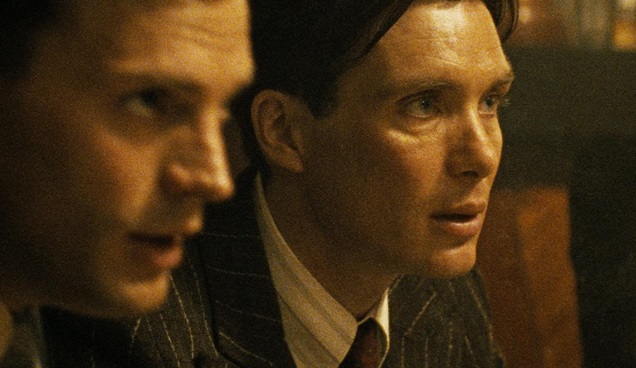
The summer blockbuster season is over, and so the cinemas are no longer full of special effects and action packed fantasies. On a comedown from the melee of superhero smackdowns, September is usually considered a "dead" month for cinema. Anthropoid, however, is a clear standout in this month's offerings for both its premise and cast, featuring Cillian Murphy and Jamie Dornan as two Czechoslovakian soldiers. Their mission: to assassinate SS General Reinhard Heydrich in the midst of the Nazi's rule on their country.

The first half of the film is all character development, with us introduced to Josef (Murphy) and Jan (Dornan) as they make their way to Prague to meet with the resistance. Acting as civilians, we see them go through the struggles of maintaining a low-profile, with Jan's emotions getting the better of him in various situations. This is made all the worse when he and Josef hide out with the Moravec family, allies of the resistance. Jan quickly becomes attached to Marie (Charlotte Le Bon) and, despite his initial concerns towards Jan's actions, Josef slowly forms feelings for Anna's friend Lenka (Anna Geislerova). Now also concerned with the safety of the women they love, Josef and Jan must carry out their assassination sooner then expected, with Heydrich expected to be transferred. From this point on, the film's tension builds to an emotionally draining final confrontation between the remaining resistance fighters and the Nazis, in what is surely one of the best shootouts committed to film.

Continuing his excellent run of work in 2016, and the film's standout performer, is Cillian Murphy. After an incredible third season of hit drama Peaky Blinders, Murphy abandons the cold exterior of gangster Tommy Shelby and brings warmth to his portrayal of Josef. He lights up the screen throughout, even when he has no dialogue. A particularly poignant moment is when Jan tells the family and Josef that Marie has agreed to marry him, and Murphy is able to capture the happiness he feels for his friend as well as his concern for him not being focused on the mission in a single look. A masterclass in subtlety. Jamie Dornan is also believable in his role as the slightly unhinged Jan, easily breaking away from his best known role as Christian Grey in the Fifty Shades of Grey series. As events unfold, Murphy and Dornan's chemistry grows as we explore how Jan slowly becomes more like Josef. Instead of panicking at the thought of death like in an earlier scene, Jan uses the calming techniques Josef taught him to help other members of the resistance during the final battle. This continues the emotional investment the audience feels in a very effective way, as we learn that the mission would be nothing without the loyalty and compassion of the two soldiers.


Of course, the climatic shootout between the resistance and the Nazis has to be mentioned, as it is one of the most gripping sequences of violence in recent memory. Instead of going for the jugular and focusing on cathartic, gory violence, Anthropoid keeps the blood to a minimum, instead focusing on the distress of the resistance fighters and the sheer number of Nazis that are coming for them. There's no fancy editing or over-the-top music, just the prominent sound of gunfire and agonising screams. It really drives home the horror of such acts, and builds to a profound ending where the Nazis attempt to drown the remaining fighters. With seemingly no escape, the sound completely cuts out, and we are forced to experience the desperate struggle with our eyes only. After this sequence, you could hear a pin drop in the screening I was in, and it's something I've continued to think about ever since.

There are other sequences of violence in the film, some of which are very distressing. The Nazi's torture of a young man is shown in some detail, and is made all the more disturbing by the fact that the scene was filmed in a real Nazi torture chamber. Thankfully, the film does not linger too much on these sequences, as the focus is on Josef and Jan. I feel it is important to show these scenes, as the film does not want to shy away from the horrible acts human beings can commit when they believe they are in the right. However, it is still a tough watch and not recommended for any viewer easily disturbed by violence in cinema. 

One minor complaint would be the romance. Don't get me wrong, it isn't portrayed badly, but I just don't feel the focus it gets adds a great deal more drama to a film with an already powerful premise. Certainly not on Josef's side of things, as he is shown to keep Jan on the straight and narrow when he becomes serious with Marie. It seems a little odd that a man with complete focus on the mission would all of a sudden become as dedicated as Jan to romance. Whilst it doesn't necessarily take away any of the film's tension, it didn't add a great deal of weight to it either. I'm not aware as to how big a part Josef's relationship with Lenka effected his actions in real life, but in this film's portrayal it doesn't really come to much. 

Similarly thought-provoking as 2002's The Pianist, Anthropoid is a powerful piece of cinema. Boasting excellent performances, particularly that of Cillian Murphy, it's portrayal of a significant moment in the history of the Second World War is an intense and emotional ride. Leading up to one of the best climaxes in terms of tension, cinematography and adrenaline, it is best experienced on the big screen. From beginning to end, it keeps you glued to the screen, and will have you thinking about what you have just witnessed for many days afterwards. If you can handle the disturbing violence, make sure you head down to your local cinema and support well acted, written and directed works of art such as Anthropoid. You won't be disappointed.

Wednesday, 31 August 2016

What's next for "Shared Universe" Films?


Shared Universe franchises are all the rage nowadays. The Marvel Cinematic Universe is the highest-grossing franchise of all time, and it now seems every other studio is aiming to replicate that success. With both Marvel and DC set to release more entries into their respective franchises, there appears to be no stopping the superhero juggernaut which has dominated the box-office for years. But who else is set to get the ball rolling for their own multi-film franchises and, more importantly, will audiences stick around long enough for them to be successful?

Perhaps unbeknown to audiences, a brand new Shared Universe series was started in 2014, with Legendary Picture's release of Godzilla, directed by Gareth Edwards. Eventually, the rumours of a new Shared Universe was confirmed, with a Godzilla sequel, standalone King Kong film and an eventual crossover pitting the two monsters against one-another all confirmed to be released within the next few years. The idea of remaking King Kong is old hat, with the 1933 original re-imagined in 1976 and 2005. The combination of King Kong and Godzilla is also nothing new, with the two monsters meeting in 1963's Japanese produced crossover. Over fifty years have passed, and to me this remake is way overdue. Despite the fact it will greatly contrast the original film with its superior special effects, audience's seeming dislike of "vs." films will surely work against it. It will no doubt boast huge spectacle and action, but its success will ultimately come down to whether audiences are engrossed enough in this franchise after another Godzilla film and King Kong film. If the upcoming Kong: Skull Island is too similar to 2014's Godzilla, enthusiasm for the big showdown (set for a 2020 release) will drop. As Batman v Superman: Dawn of Justice and Suicide Squad have proved this year, critical reception means nothing for Shared Universe films compared to the amount of money they can generate for the studio, and the Godzilla-Kong franchise will have stiff competition from Marvel's dominance of the summer blockbuster season.


Disney's upcoming Star Wars films look to be creating a Shared Universe as well. With the new prequel film, Rogue One, the series could reintroduce previously unseen characters into the sequels to 2015's Episode VII, creating a much larger universe across each new film. Money should be no obstacle for the sequels, given the enormous success of Episode VII. However, an abundance of prequels may become tiring, especially how there already exists a prequel trilogy and a Han Solo origin film has been green-lit. After 10 years absence until Episode VII was released, audiences were quick to make the latest Star Wars film one of the most successful, and so I don't think the plethora of Star Wars sequels will be seen as being as "tiresome" as the next lot of Marvel and DC films.


One genre which I feel could start its own Shared Universe within the next few years is the horror genre. With recent remakes of Frankenstein and Dracula, the opportunity to combine those famous characters may have passed, but who's to say another crossover following in the footsteps of Freddy vs. Jason won't happen soon? If it were to happen, it could possibly involve remaking classic horror cinema that hasn't been re-imagined for contemporary audiences, such as 1987's Hellraiser. What matters is whether the films can remain scary and bring something new to the table, something in which recent horror remakes have severely lacked. Whilst I don't think a horror Shared Universe would be anywhere near as successful as Marvel, DC, Godzilla and Star Wars, it would provide a more radical alternative to the growing list of Shared Universe franchises.

With Marvel's Doctor Strange and Star Wars' Rogue One to see out the year, 2017 could prove to be the defining year for Shared Universe films. Will audiences flock to the cinema to see yet another Spiderman remake? Will Kong: Skull Island be able to match the success of Godzilla? Can DC win back the critics with Wonder Woman and Justice League? All will be revealed in what will be another year packed with these types of films, and I'll be sure to review some of them upon release.