Wednesday, 16 December 2015

Jason and the Argonauts (1963) Review


"Envoys who come to me in deceit remain in death" - King Aeetes


This is one of those films I saw at young age, and has stayed with me ever since. Jason and the Argonauts is a film I never forgot, which is testament alone to its brilliance. From memorable characters, thrilling set-pieces and fantastic monsters, this is an adventure film that satisfies on all fronts. It is, without doubt, one of my favourite films of all time.

The story begins in Thessaly, where a prophecy from Greek God Zeus (Niall MacGinnis) tells of the triumph of the twisted Pelias (Douglas Wilmer), where he will take the throne of Thessaly by force. However, it is also foretold that the overthrown king's son, Jason, will return to win it back. Spurred on by this knowledge, Pelias raids Thessaly, but is unable to prevent the young Jason being carried to safety. Twenty years later, the now adult Jason (Todd Armstrong) returns to reclaim his kingdom, and plans to inspire the people of Thessaly by retrieving the mythical Golden Fleece from the other side of the world. Jason soon gathers a ship and a crew, and he and the Argonauts set sail on the perilous voyage, encountering monsters and other dangers along the way.

As an adventure story, this is as well paced as you'll ever see. The opening siege of Thessaly is a thrilling introduction to the film, and is possibly the darkest in tone that the film gets. We get a sense of how ruthless Pelias is, as he murders his way to the throne. When the adult Jason appears, the adventure is set into motion with Jason conversing with the Gods, where he declares a series of games to find the best men to join his crew. Once the Argo sets off, it's one brilliant set-piece to the next, but still leaving plenty of time to get to know the characters further. The final moments, where the Argonauts are attempting to escape with the golden fleece, is one the standout action sequences in the history of cinema. We go from Jason retrieving the Fleece from the clutches of a ferocious seven-headed Hydra, to the Argonauts duelling a resurrected group of skeletons, which makes for a pulsating conclusion.

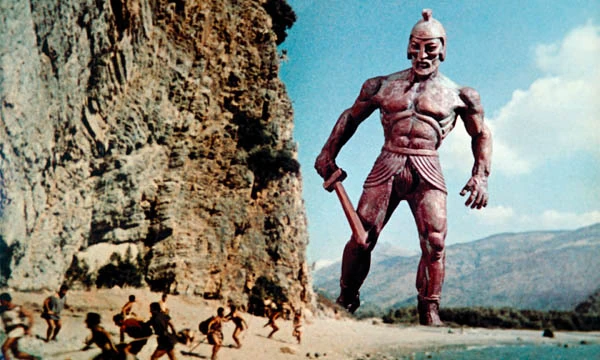
The most memorable aspect of the film is the special effects by Ray Harryhausen. Stop-motion effects had been popularised in films such as King Kong (1933), but never had there been such technically impressive use of them until Jason and the Argonauts. All the mythical creatures the Argonauts encounter are brought to life via this technique, and the results make for a brilliant collection of adversaries. From the towering bronze giant Talos to the  menacing Harpies, each monster is totally unique and used to their full potential. My personal favourite is Talos, who stood out to me the most when first saw the film. I was so impressed with how tall he appeared and how threatening he was, that I regard him as one of the best giant movie monsters ever.

As well as the monsters, the characters are also great. Todd Armstrong is very likeable as Jason, even with his voice woodenly dubbed. The other Argonauts each have a strong presence, particularly the headstrong Hercules (Nigel Green) and the backstabbing Acastus (Gary Raymond). Jason's love interest, Medea (Nancy Kovack), comes late in the film, but she at least gets plenty to do and plays a pivotal role in ensuring the success of the mission. Co-starring is Bond-girl Honor Blackman as Hera, Queen of the Gods. She and Zeus (Niall McGinnis) make a good pairing, and give surprisingly natural performances for such powerful characters.

To conclude, Jason and the Argonauts is a must-see for fans of adventure cinema. Featuring a strong cast and characters, memorable monsters and limitless imagination, it ticks all the right boxes. It still stands up well today because the story is told so well, and I think this is a film that almost anyone can enjoy. It was one of my favourite films as a child, and repeated viewings has only further endeared it to me. I can't recommend it highly enough!

Pros:
+ Perfect pacing, with plenty of time for developing characters alongside the action.
+ Solid performances and very likeable characters.
+ The show stealing special effects, which are still very impressive today.
+ The final fight with the skeletons. One of the most unforgettable scenes in cinema history.

Cons:
- The dubbing of Todd Armstrong as Jason is wooden, but at least not enough to not like the character.

Wednesday, 9 December 2015

Doctor Who: Hell Bent Recap


It's the series finale, and the Doctor isn't as we know him best. Having lost his best friend and being trapped inside the confession dial for over 4 billion years, he's not in a mood that should be challenged. After realising his own people, the Time Lords, where being all his suffering, the Doctor sets out to reclaim his own planet from the corrupt, even if it means breaking all the moral codes he lives by...

After announcing his arrival, the Doctor returns to his childhood home, awaiting an audience with President Rassilon (Donald Sumpter). Once Rassilon eventually appears complete with armed guards and the General (Ken Bones), the Doctor wins them all over to his side (apart from Rassilon, whom he banishes). Not wanting to stop there, he changes an established point in history, by rescuing Clara from her death in Face the Raven. Now on the run, from the Time Lords, the Doctor must find a way to ensure Clara never has to die, and discover the truth about the mythical Hybrid.

So after a series long build up, does it all pay off in this final episode? I believe it does, as we not only get answers to the questions poised by earlier episodes, but we also see a change to the characters. Namely, the biggest character change is the Doctor, as he is at his moodiest since the Christopher Eccleston series exactly ten years ago. He is not in a forgiving kind of mood, and there is also an uneasy calmness about him to start with, as he barley says a word to convince the other Time Lords to revolt against Rassilon. Clara is unexpectedly handed a large role in this episode, with her being removed from her timeline so that the Doctor can keep her alive. I thought Face the Raven was a strong enough send off to her character, but her appearance here is still more than welcome. Maisie Williams also returns at the end of the episode, with her aiding in the explanation of what exactly the Hybrid is. Since Ashildr's introduction, this idea of the Hybrid has been a luring threat, but never did the Doctor expect for it to be directly liked to himself and Clara. The Hybrid is revealed to be the result of the Doctor and Clara's friendship, and the threat comes from the Doctor's new found ruthlessness after her death. I thought this was a clever and satisfying reveal, and one that I wasn't expecting, as it turns out Ashildr was merely a ruse.

Being that the episode takes place on the rarely featured planet of Gallifrey, there are plenty of little surprise for fans to enjoy. The most obvious, of course, is the return of the original TARDIS design from the 1960's, complete with the original sounds from the classic series. Since the Doctor has always been played by white male actors, many people have wondered whether it is possible for Time Lords to change gender and/or race. With the Master being reintroduced as the female Missy last series, Hell Bent gives us the answer to the other half of the thought. The General is shown regenerating into a  younger black woman, the first time in the shows history that both a gender and race change has been depicted.

So with the Doctor now travelling alone, he sets off for new adventures starting Christmas day. As promised, here is my list of overall pros and cons for this latest series of Doctor Who:

Pros:
+ The Doctor and Clara's relationship - an obvious choice, but there have been some pretty naff Doctor/companion pairings in the past. The Twelfth Doctor and Clara have really gelled perfectly this series, and the performances of both Capaldi and Coleman have been a joy to watch.
+ Regular two-part stories - In the classic series, each story consisted of at least two episodes, and having that format return has aided this season's stories to become better paced.
+ Story arc - a staple of Doctor Who since 2005, this year's arc has been one of the most intriguing, with a satisfying pay-off to boot.
+ Fresh ideas - though not all of them have worked (Sleep No More), this series has had a much stronger line of stories. Largely, that's down to the two-part format, but stories such as finale have explored the complexities of the central characters more than the last series ever did.

Cons:
- The Girl Who Died - definitely the weak point of the series, with it clashing against the fresh ideas of other episodes, due to its recycled plot of a village under attack.
- Some weak supporting characters - namely the characters from the Under the Lake story and Sleep No More. They were either killed off without any prior character development, or suddenly revealed hidden feelings never at all hinted at.

This concludes my look at Doctor Who series nine. Some individual pieces I've written haven't been my best, partly due to my course workload being my priority. Nevertheless, I have very much enjoyed writing about this series, and to those who have followed my posts weekly: thank you very much for your interest and support! 

Wednesday, 2 December 2015

Doctor Who: Heaven Sent Recap


It's the penultimate episode of series nine, and as often happened since the show's revival, we have either a Doctor or companion-light episode. Heaven Sent serves as a solo piece for Peter Capaldi's Twelfth Doctor, as well as the middle entry in the three-part finale. Fan reaction to this episode has been strong, with some stating they think it's the best episode of Peter Capaldi's tenure. I can't say I agree, but there is certainly plenty worth talking about in this episode.

After witnessing the death of his best friend, the Doctor vows to find whomever is behind his latest plight. Having been teleported to an unknown location at the end of Face the Raven, he is left alone to face his nightmares, with no clear way of escaping. The Doctor has been transported to a castle-like location, where he soon discovers he is not alone. A creature lurking in the shadows regularly appears to torment him, all while trying to work out how exactly to escape. Through a complex series of events, it is revealed that the Doctor is stuck in some sort of time loop, where every room in the castle reverts back to how it was before the Doctor entered them. After constant spooks from the creature, the Doctor works out that the way to escape is to confess his darkest secrets. This eventually leads him back home to Gallifrey, where he is set to confront his own people for their involvement in his recent sorrow.

What I liked most about the episode, like so many recent episodes, was Peter Capaldi's performance. He's more than capable of handling an episode where he is left alone to advance the plot, and he really gets to show off his acting ability here. There can be no doubt that he is one of the best actors to play this iconic role. Being that we spend the entire episode with the Doctor, we learn all about how he thinks his way out of dangerous situations. These sequences involve imagining he is back in the TARDIS, with Clara aiding him by asking the right questions. These are my favourite moments of the episode, as the Doctor's manic way of thinking and his intelligence are all clearly displayed, and that again is largely down to Capaldi's acting.

I found the episode lacked a good adversary, however. The creature that haunts the Doctor is a large monster hidden under a veil. While the design is scary, it's shown in close up way too often. There is never any hint as to what this thing could look like, and instead opts to show it clear as day within its first moments of screen time. I find that with stories of this kind, not seeing the monster, and only hinting at what it looks like, is more effective and scarier. For me, that's what made the series four episode, Midnight, so good. The monster in that story was never shown, and all we knew about it was that it was able to possess people, but with no clear indication as to what its goal ultimately was. Having said that, though, the monster in Heaven Sent is at least effective in that the Doctor is clearly distressed by its presence, and that it is always able to find him no matter where he hides.

Heaven Sent is an episode you have to give your full attention to, and once it's over, you may find your brain is hurting from trying to follow everything that goes on! Its merits are the performance of Peter Capaldi, and the clever writing and unfolding of the mystery. The monster isn't very memorable, but I'd say the episode overall will not be soon forgotten. It also does a good job of not revealing too much, as we still have one more episode of this series to go. Next week, we'll see if all the build up from this episode, and indeed this whole series, has been worth it, as series nine comes to a close in Hell Bent...

Wednesday, 25 November 2015

Doctor Who: Face the Raven Recap


Maisie Williams starring in a show featuring a magic raven? This sounds strangely familiar. Ashildr is back once again, continuing her complex connection to the Doctor. Rigsy (Joivan Wade) is also back after his single appearance last season. But as some characters return, a regular leaves in the series' most gut-wrenching ending of an episode by far.

After discovering a mysterious tattoo on the back of his neck, Rigsy calls the TARDIS in the hope the Doctor and Clara can help him. This leads them to discovering a hidden street in London, where Ashildr poses as the mayor. The TARDIS crew soon realise the brutal laws of the street, as people sentenced to death are forced to "face the raven", whereupon said raven stalks and kills them. One such man sentenced to death is Rigsy, whose tattoo is counting down to the moment the raven will come for him. With time running out, the Doctor and Clara must convince the townsfolk of Rigsy being innocent of a murder case, and Clara is prepared to go to extreme measures to ensure this...

First things first, does the episode hold up without that big, emotional ending? I'd say it does for the most part, with there being a good focus on the mystery of the street, and not just endless build up to the climax. The street itself is a claustrophobic environment, and its residents are equally unsettling. They are disgusted by Rigsy's supposed act of murder, yet never act violently towards our protagonists. Instead, they silently declare him "murderer" whenever Rigsy is present, a much more nerve-wrecking attitude than a bombastic mob of grievers. There's this weird subplot that focuses on the daughter of the "victim", someone who can see the past and future. Both her and the victim have a more alien appearance, with them having another face on the back of their heads, and the daughter reveals that Ashildr is the mastermind behind Rigsy's predicament. Very little time is spent with this character, and so she feels like a simple plot device to quickly reveal everything the Doctor needs to know. Ashildr, however, is merely a puppet acting under orders. She leads the Doctor to her with the threat of Rigsy's forthcoming death, and plans to transport him far away. All of this comes to the fray very quickly, but it at least creates potential for the season finale, as we await to learn who exactly she is working for.

But the moment everyone's been talking about is the sacrifice of Clara, which many viewers have said was maybe a tad too emotional for a family drama. After learning the tattoo can be transferred to a willing taker, Clara becomes marked for death after convincing Rigsy Ashildr cannot break her word of endangering her. She does this without anyone else in the know, and it ultimately costs Clara her life. Ashildr promised her superiors to mark only Rigsy for death, and so the transfer of the tattoo to Clara cuts her out of the agreement, rendering her powerless to do anything. Not even the Doctor can prevent the raven taking her life, and he quickly resorts to threatening Ashildr to save her. From this point, Clara does what she has been doing brilliantly throughout her tenure as the Doctor's companion: reminds him of who he really is. Whenever the Doctor was lost, it was Clara that helped him through the struggle, and kept him motivated by the promise he made to himself: to help others (hence the title of Doctor). This was something she did in the Doctor's darkest hour, featured in the 50th anniversary special, and its resurgence here makes for a fitting send off for the character.

Of course, what makes this final scene work is the performances. Both Capaldi and Coleman are at their best here, and they deserve many plaudits for their work, with so many different emotions to cover in such a short space of time. I disagree with the opinion that the scene was too drawn-out, and therefore too over emotional. Since its revival in 2005, Doctor Who as ensured heartfelt and epic exits for its long-serving companions. Why some feel this one should have been lessened is beyond me, as the character has been involved in the show since 2012, and has been revealed as having a major involvement with the Doctor's past.

And so, as we say goodbye to Clara, the Doctor has no time to mourn as he is further involved in the oncoming danger. Who exactly set this plan into motion, and how will the Doctor survive? It's all to be expected as we move into the final episodes of this series...

Wednesday, 18 November 2015

Doctor Who: Sleep No More Recap


"You must not watch this" warns a frightened man right at the start of the episode. The man's name is Gagan (Reece Shearsmith), lead researcher aboard a space station orbiting Neptune. He informs us he'll show what happened aboard the station from found footage, and the episode gets underway without the famous Doctor Who intro for the first time in the show's history. After a promising start, Sleep No More ultimately turns out to be a mixed bag. Writer Mark Gatiss is no stranger to writing Doctor Who, and some of his ideas here are intriguing, but there is an overall sense of let down by the end of it all, making this week's episode pale in comparison to others in this series.

After Gagan' introduction, we meet four individual members of a rescue team, sent to investigate the strange happenings aboard the space station. They soon encounter the Doctor and Clara, and are promptly chased by humanoid like creatures. With the group split up, the Doctor uncovers the truth behind the monsters, and believes there is a mastermind behind their existence. As the rest of the group are stalked by the monsters, the Doctor and Clara must find a way to stop them from killing everyone aboard. But how do you fight something that can see you wherever you go?

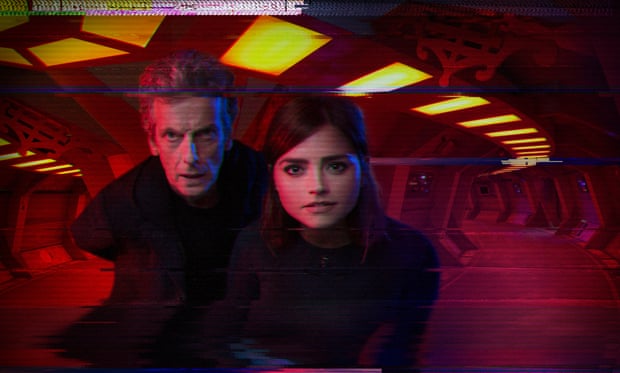
Whatever your opinion of Sleep No More may be, there is no denying it's a unique episode in the show's history. Doctor Who has always prided itself on having frightening monsters and themes, but never before has there been a "found footage" style used for a story. Sometimes however, it is easy to forget this style is being used for this episode, as all the point of view camera angels are in high definition. For the most part though, this not too distracting, and the camera angels from the corners and television screens all work well. The episode's set design must also be mentioned, as it is clearly influenced by James Cameron's 1986 science fiction classic, Aliens. Some of the shots of the team walking through the space station's corridors, illuminated with red lighting, feel like direct copies from the film, but it is no bad thing to see the influence of one of my favourite films being shown in one of my favourite shows. 

A few negatives, however, are present in the form of characters and the monsters that pursue them. As with the Under the Lake/Before the Flood two-parter, the supporting characters are barley fleshed out. Given how this is only a single story, it doesn't help that one of the team is killed off quickly, as we never get a chance to get to know his personality and significance. The episode's biggest problem, though, are the monsters. Dubbed as the "Sandmen" by Clara, they derive from possibly one of Doctor Who's silliest ideas for a monster: sleep dust. Doctor Who has often been praised for its imaginative monsters and villains, but this really feels like a desperate attempt to make something as random as sleep dust into something scary. Not only that, but the monster's appearance and characteristics are almost exactly the same as the Marvel Comics super-villain the Sandman, so not a great deal is original about this week's threat except its bizarre point of origin. The reveal at the end isn't all that surprising either, making what build up the episode have fall flat by the time it's over.

Despite some good ideas with the found footage and influence of the sci-fi classic Aliens, Sleep No More will most likely fall under the radar when this series is finished. Its monsters aren't very threatening, and its conclusion feels rushed. Mark Gatiss has proven himself to be a strong writer of horror stories in the past, and Sleep No More isn't so bad that I won't be excited for the next thing he pens. A weak episode overall, but certainly not the worst.


Monday, 9 November 2015

Doctor Who: The Zygon Inversion Recap


The Zygon Invasion was a welcome return for some familiar faces, and was perhaps the best first half of a two parter of this current series. The concluding half, The Zygon Inversion, rounds the story off superbly, featuring clever twists, and perhaps Peter Capaldi's finest moment as the Doctor. The Zygon Inversion is, without doubt, this series' strongest episode.

After shape-shifting into the Doctor's most trusted allies, the Zygons continue to take control, and push hard for a full-scale war to break out on Earth. Osgood and The Doctor narrowly escape from the missile fired at them by the Zygon-Clara (now named "Bonnie") at the end of the previous episode. With time short, the two races descend on UNIT HQ in search of the "Osgood Box". Kept hidden in UNIT's vaults, the device is said to be powerful enough to box instigate or prevent the war. As UNIT and the Zygons arrive to obtain the box, the Doctor is caught in the middle, and must convince both parties not to pursue activating it and re-establish the broken peace between humans and aliens.

Much of the episode deals with Clara and her evil counterpart, Bonnie. Having Jenna Coleman portray a villain was a good way to change the dynamic between her and Peter Capaldi, and she handles playing a villain and a hero with ease. The writing behind Clara and Bonnie's interactions is particularly gripping, as Bonnie is able to detect any lies Clara may be telling her, as they are both linking mentally and share the same pulse. The scenes with Clara tapped in a coma like state are also well handle, with slanted camera angles and a flickering television present throughout. It very much had the look of another of my favourite television series, Life on Mars, and the use of similar surrealism works within the context of the episode very well.

But Peter Capaldi's performance is the episode's highlight. In particular, his speech towards the end of the episode. Acting-wise, Capaldi is captivating, as he tries to bring the idea of war on Earth into perspective for Bonnie. He mentions his past experiences of war, and that nobody should ever have to go through what he went through. Previous Doctors, such as Matt Smith's Eleventh Doctor, have made passionate speech's about their experiences of war, and Capaldi's will surely be regarded as arguably the very best. For me, this is Capaldi's greatest moment in the role so far, and one that will be tough to beat for the remainder of this series.

As two-parters go, this is one of Doctor Who's strongest in recent years. Combining classic monsters and creative writing, The Zygon Invasion/Inversion is perhaps the best story of Capaldi's two season run. Coming off the back of the previous two-parter, it is certainly a return to form for the show. The Zygons are given new depth and the Doctor is at his passionate best. It doesn't get better than that!

Wednesday, 4 November 2015

Doctor Who: The Zygon Invasion Recap


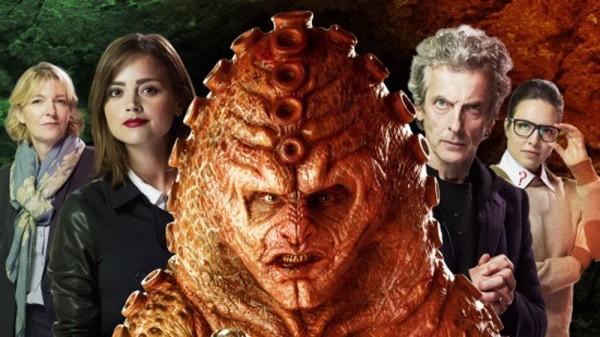
Becoming something of a fan-favourite monster since the 1970's, it was about time the Zygons got their own story in 21st century Doctor Who. After only having a brief role in the 50th anniversary special (The Day of the Doctor) two years ago, it's good to see them become the focus of a two-parter. Clara is also back after her absence from last week's episode, as well as UNIT and some new faces.

After the events of The Day of the Doctor, the Zygons and the human race are at war after the agreed peace treaty between the two races collapses. Feeling suppressed by having to hide their true appearance from the human race, the Zygons launch a plan to claim the planet for themselves. The Doctor is called in by UNIT to help rescue Zygon captive Osgood (Ingrid Oliver), and Clara sets off to find the Zygon base of operations. With UNIT unsure as to whom exactly they can trust, The Doctor must assume his role of President of the World if he is to have any chance of ending the Zygon invasion. 

First things first, this is a massive improvement of the previous two-parter. A lot of that is down to the thrill of seeing a classic Doctor Who monster revitalised, but it also comes down to having much more happen in the space of 45 minutes. We are thrown straight into the action, with the Zygon revolt already taking place before UNIT have a chance to contact the Doctor. Added to that is a great use of the Zygon shape-shifting ability, which makes for one hell of a great ending to this particular episode. It's also a delight to see Rebecca Front reunited with Peter Capaldi, having appeared together in the BBC comedy The Thick of It. What's interesting is that there is a role reversal with their characters from each show: in The Thick of It, Front's character, Nicola Murray, would often be on the receiving end of a swear-fuelled rant by spin doctor Malcolm Tucker (Capaldi). In this week's episode, Front plays Colonel Walsh, who disregards the Doctor's advice at almost every turn.

Despite seemingly being killed off last season, UNIT member Osgood is back, and is shown to have developed a sisterly bond with her Zygon doppelgänger. It is revealed that no-one is sure as to whether it was the human or Zygon Osgood who was killed off, with her referring to herself as both human and Zygon. This continues the series theme of hybrid characters, as seen with Ashildr in the previous two episodes. Osgood also continues her role as being a walking reference to classic Doctor Who, this time wearing a Sylvester McCoy era jumper and once again wearing Tom Baker's iconic scarf.

With an ending that sets things in motion nicely, The Zygon Invasion is perhaps the series' strongest opening part of a story. With a dark tone and plenty of mystery, it breathes new life into the series, as well as a classic group of monsters. The second part has a lot to live up to, and I can't wait to see what becomes of this story in The Zygon Inversion...