Monday, 9 November 2015

Doctor Who: The Zygon Inversion Recap


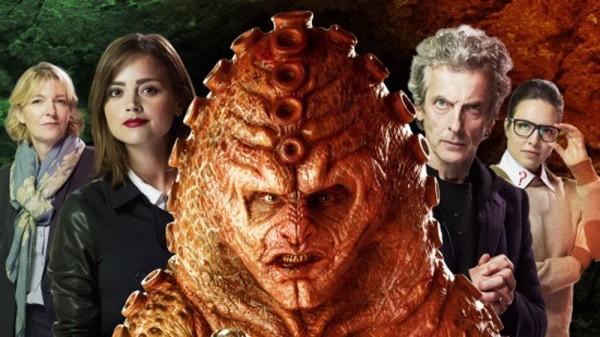
The Zygon Invasion was a welcome return for some familiar faces, and was perhaps the best first half of a two parter of this current series. The concluding half, The Zygon Inversion, rounds the story off superbly, featuring clever twists, and perhaps Peter Capaldi's finest moment as the Doctor. The Zygon Inversion is, without doubt, this series' strongest episode.

After shape-shifting into the Doctor's most trusted allies, the Zygons continue to take control, and push hard for a full-scale war to break out on Earth. Osgood and The Doctor narrowly escape from the missile fired at them by the Zygon-Clara (now named "Bonnie") at the end of the previous episode. With time short, the two races descend on UNIT HQ in search of the "Osgood Box". Kept hidden in UNIT's vaults, the device is said to be powerful enough to box instigate or prevent the war. As UNIT and the Zygons arrive to obtain the box, the Doctor is caught in the middle, and must convince both parties not to pursue activating it and re-establish the broken peace between humans and aliens.

Much of the episode deals with Clara and her evil counterpart, Bonnie. Having Jenna Coleman portray a villain was a good way to change the dynamic between her and Peter Capaldi, and she handles playing a villain and a hero with ease. The writing behind Clara and Bonnie's interactions is particularly gripping, as Bonnie is able to detect any lies Clara may be telling her, as they are both linking mentally and share the same pulse. The scenes with Clara tapped in a coma like state are also well handle, with slanted camera angles and a flickering television present throughout. It very much had the look of another of my favourite television series, Life on Mars, and the use of similar surrealism works within the context of the episode very well.

But Peter Capaldi's performance is the episode's highlight. In particular, his speech towards the end of the episode. Acting-wise, Capaldi is captivating, as he tries to bring the idea of war on Earth into perspective for Bonnie. He mentions his past experiences of war, and that nobody should ever have to go through what he went through. Previous Doctors, such as Matt Smith's Eleventh Doctor, have made passionate speech's about their experiences of war, and Capaldi's will surely be regarded as arguably the very best. For me, this is Capaldi's greatest moment in the role so far, and one that will be tough to beat for the remainder of this series.

As two-parters go, this is one of Doctor Who's strongest in recent years. Combining classic monsters and creative writing, The Zygon Invasion/Inversion is perhaps the best story of Capaldi's two season run. Coming off the back of the previous two-parter, it is certainly a return to form for the show. The Zygons are given new depth and the Doctor is at his passionate best. It doesn't get better than that!

Wednesday, 4 November 2015

Doctor Who: The Zygon Invasion Recap


Becoming something of a fan-favourite monster since the 1970's, it was about time the Zygons got their own story in 21st century Doctor Who. After only having a brief role in the 50th anniversary special (The Day of the Doctor) two years ago, it's good to see them become the focus of a two-parter. Clara is also back after her absence from last week's episode, as well as UNIT and some new faces.

After the events of The Day of the Doctor, the Zygons and the human race are at war after the agreed peace treaty between the two races collapses. Feeling suppressed by having to hide their true appearance from the human race, the Zygons launch a plan to claim the planet for themselves. The Doctor is called in by UNIT to help rescue Zygon captive Osgood (Ingrid Oliver), and Clara sets off to find the Zygon base of operations. With UNIT unsure as to whom exactly they can trust, The Doctor must assume his role of President of the World if he is to have any chance of ending the Zygon invasion. 

First things first, this is a massive improvement of the previous two-parter. A lot of that is down to the thrill of seeing a classic Doctor Who monster revitalised, but it also comes down to having much more happen in the space of 45 minutes. We are thrown straight into the action, with the Zygon revolt already taking place before UNIT have a chance to contact the Doctor. Added to that is a great use of the Zygon shape-shifting ability, which makes for one hell of a great ending to this particular episode. It's also a delight to see Rebecca Front reunited with Peter Capaldi, having appeared together in the BBC comedy The Thick of It. What's interesting is that there is a role reversal with their characters from each show: in The Thick of It, Front's character, Nicola Murray, would often be on the receiving end of a swear-fuelled rant by spin doctor Malcolm Tucker (Capaldi). In this week's episode, Front plays Colonel Walsh, who disregards the Doctor's advice at almost every turn.

Despite seemingly being killed off last season, UNIT member Osgood is back, and is shown to have developed a sisterly bond with her Zygon doppelgänger. It is revealed that no-one is sure as to whether it was the human or Zygon Osgood who was killed off, with her referring to herself as both human and Zygon. This continues the series theme of hybrid characters, as seen with Ashildr in the previous two episodes. Osgood also continues her role as being a walking reference to classic Doctor Who, this time wearing a Sylvester McCoy era jumper and once again wearing Tom Baker's iconic scarf.

With an ending that sets things in motion nicely, The Zygon Invasion is perhaps the series' strongest opening part of a story. With a dark tone and plenty of mystery, it breathes new life into the series, as well as a classic group of monsters. The second part has a lot to live up to, and I can't wait to see what becomes of this story in The Zygon Inversion...

Friday, 30 October 2015

Spectre (2015) Review


"It was me, James. The author of all your pain"- Franz Oberhauser.


Three years ago, we were treated to the biggest James Bond film to date, with Skyfall being a smash with critics and performing incredibly at the box-office. Now, with director Sam Mendes once again at the helm, Spectre is unleashed in cinemas, with all the hype one now expects for a new Bond film. Can it match the thrills and epic scale of Skyfall, and continue to prove why the Bond franchise is so endearing? Long story short, I'd say that Spectre manages to be just as good as Skyfall, with it boasting bigger action and, best of all, an equally threatening villain.

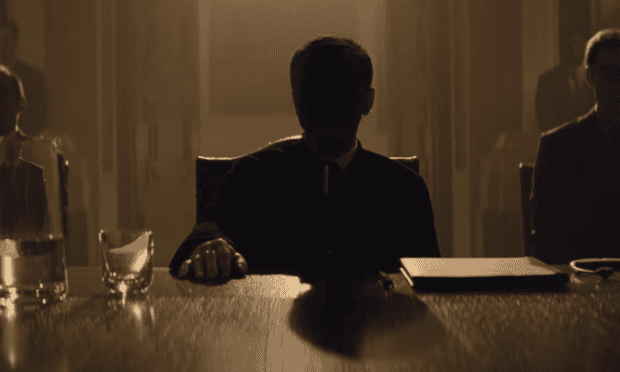
I don't want to give too much away regarding the plot as the film is still in its early stage of release, and hasn't even been released in North America. We open with Bond (Daniel Craig) on a mission in New Mexico, where he is tracking down a terrorist. Of course, this leads to a confrontation between the two, and an exciting chase through the busy streets ensues. We learn that the man Bond was chasing is linked to an organisation known as Spectre, and Bond must discover exactly what they are planning. Meanwhile, M (Ralph Fiennes) has a fight on his hands, as British government agent C (Andrew Scott) plans to close down the 00 initiative. Alongside M's assistant Eve Moneypenny (Naomie Harris) and gadget-meister Q (Ben Whishaw), Bond faces his most testing adversary to date, the mysterious Franz Oberhauser (Christoph Waltz).

Clocking in at two and a half hours, Spectre certainly has plenty of room to work with. Initially, it seemed as if there were two plots going on with no obvious link, with Bond tracking Oberhauser and M battling political forces back in London. As the film progressed, more light was shed as to how the two plotlines link. I felt the development of the two plotlines was handled well, as they were told through the perspective of the heroes, keeping the Spectre organisation and C's aims shrouded in mystery. As is a tradition in these films, Bond travels all over the globe to find out what he can, which leads him to meeting new Bond-girl Madeleine Swann (Léa Seydoux). Swann is at first distrusting of Bond, with her not falling for his charms. Only after they are pursued by Spectre agent Mr. Hinx (Dave Bautista) does she realise that Bond is the best chance she has of staying alive. Madeleine is one of the film's most important aspects, as she is the only one who can help Bond track down Oberhauser. Seydoux puts in a commanding performance, which works well opposite Craig's suave James Bond.   


But the film's highlight is undoubtedly the villain, Franz Oberhauser. With plenty of menace and a grudge against Bond, Oberhauser is 007's worst nightmare. Christoph Waltz had big shoes to fill after the fantastic performance of Javier Bardem in Skyfall, but he fits in with the recent cannon of Bond villains with ease. Cold and calculating, there is a great deal of tension whenever he appears, and Waltz was clearly the perfect choice to be given such a role. After Oscar winning performances in Inglorious Basterds and Django Unchained, the appearance of Waltz in Spectre was a big draw for the fans, and was definitely the aspect of the film I was looking forward to seeing most. Giving him a personal connection to Bond was a good creative choice, as I always think villains are always more intriguing and threatening when having a personal conflict with the hero, which is what aslo made Silva in Skyfall so great.

Spectre also boasts incredible action and stunt sequences, which will have you on the edge of your seat. Throughout the film, there are many chases and hand-to-hand combat scenes, all of which are brilliantly choreographed, shot and edited. After many criticisms of the action in 2008's Quantum of Solace, both Skyfall and Spectre have ensured more than satisfying action, and Spectre manages to take things to the next level. More vehicles are involved, new gadgets are introduced, and Mr. Hinx makes for Bond's most physically demanding opponent in the Daniel Craig era. Much of Spectre's publicity has used footage of a chase scene midway through the film, involving cars and a plane racing through the snow-capped mountains. The sequence deserves every bit of praise its receiving, as its one of the best chases probably in the entire history of the James Bond franchise. The sequence just gets bigger as it progresses, with Bond seemingly outmatched by the Spectre agents, leading to a climax that doesn't disappoint.

With just as much hype as Skyfall, Spectre matched my high expectations at almost every turn. My only gripe is that some of the cast are underused. Monica Belluci's character came of as just a plot device rather than a meaningful character, and Eve Moneypenny is only really used in the film's first act. That being said, Spectre really is a fantastic achievement. The pressure was on for the film to deliver, and for me, it delivers in spades. A worthy addition to the Bond franchise, with the benchmark set by Skyfall well and truly risen up a notch. I eagerly anticipate where the ending of the film is leading us, and until then, I'm sure to check out Spectre many more times in the run up to the next instalments release.

Pros:
+ Christoph Waltz as Franz Oberhauser makes for a fantastic villain.
+ Incredible action sequences, in particular the mountain chase.
+ Intriguing plot that links well with the other three Daniel Craig films.
+ Well written and acted Bond-girl makes for a dynamic pairing with Bond.

Cons:
- Underusing Monica Belluci and Naomie Harris (in the second act). However, this is only a minor complaint.

Wednesday, 28 October 2015

Doctor Who: The Woman Who Lived Recap


After the disappointing The Girl Who Died, this week's episode offers more insight to the character of Ashildr (here, simply referring to herself as Me), as well as the effect The Doctor's exploits have on someone after he disappears from their life. This companion-less story is certainly an improvement over last week's tale, but is still lacking a compelling narrative overall. Its strength, however, comes from Maisie Williams and Peter Capaldi, both of whom are on top form.

Taking place many years after the battle between the Vikings and the Mire, the Doctor arrives in 1651, where he encounters Ashildr once again, this time posing as infamous robber "The Knightmare". Ashildr recognises the Doctor even after so many years, and tells him of the struggles she has faced during her immortal life. With the Doctor unwilling to let Ashildr travel with him, he soon faces more than he bargained for when Ashildr becomes allies with a deadly alien warrior, who is hell bent on ripping the world apart so that his kind can invade.

Story-wise, this is still far below the standard of the first four episodes, with a very similar plot to last week: an alien invasion. The invasion plotline involving the alien, Leandro (a lion-like beast), is given much less focus than the interactions between the Doctor and Ashildr. It almost seems like a plotline from a different episode, and it all leads to a rushed an un-exciting climax. There's also comedian Rufus Hound starring as Sam Swift, a rival of Ashildr, who becomes involved in Leandro's scheme of opening a portal. Ashildr believes this portal will provide an opportunity to escape her mundane life on Earth, and so she briefly turns against the Doctor. Swift isn't that developed as a character, and his involvement in the less interesting plotline of the episode means he too isn't that interesting. It very much feels like Hound was allowed to play the character with his own comedic style, which could have worked better if featured in a lighter-toned episode.

Williams and Capaldi prevent this from being totally forgettable, as their performances are a cut above every other aspect. The writing being their dialogue is strong, but the emotions evoked from both actors is what really sells, and had me intrigued as to how their friendship would end up. Between this and last week's story, Ashildr has gone through much, including becoming a mother and losing her children to the plague. She seeks the thrills of the Doctor's life, unaware that it involves just as much pain and sacrifice. The Doctor's good nature is thoroughly tested, and this time its by someone who has seen just as much suffering as he has. This makes for good drama and character development, with them both unsure of one-another even after working together to stop the invasion.

Better than last week, but by no means a classic, The Woman Who Lived is certainly a mixed bag. Storywise, its only slightly better than the first part, but the characters are developed more and are given priority. This is going to be one that divides opinion,  but will most likely be forgotten if the series gets back on track. It helps, then, that we have the return of some classic monsters next week...

Wednesday, 21 October 2015

Doctor Who: The Girl Who Died Recap


Once again, we have another two-parter to talk about. It seems this will be a staple of this particular series, and one so far I feel has worked to the show's advantage. Story lines can become more complex and characters can be further fleshed out. This week's episode, The Girl Who Died, is more a set up to the character of Ashildr (Maisie Williams) than the first of a two part story, and for me, falls significantly short of the series' so far high standard.

The plot combines both past and future in equal measure, as the Doctor and Clara travel back to the time of the Vikings, just an alien race of warrior aliens plan to raid their village. These aliens, the Mire, live for the thrill of war, and Ashildr let's her pride rule her head when she declares war on the Mire after being captured along with Clara. Returned as messengers to the Doctor and the remaining villagers, they must prepare themselves for the oncoming raid. But does Ashildr have a greater purpose to serve in the Doctor's oncoming days?

The big draw for this episode was seeing Maisie William's in another big television franchise. Having made a name for herself in Game of Thrones, her appearance in Doctor Who was highly anticipated. She gives a good performance here, and is thankfully involved in much of the story. She seems to be the only one of the villagers to be given any sort of character development, whereas the rest of the townsfolk kind of go under the radar. Not much was explored about the Mire, nor do they do that much throughout the episode. All we know is that they love war and have a ruthless reputation, which makes them sound like a very basic Doctor Who monster. The Sontarans, aliens that have appeared in both the classic and newer series, can also have this description applied to them. However, the Sontarans are far more interesting as their code of honour is explored, and their straight-forward attitude creates opportunities for some comedic moments, too.

One thing I really disliked was the story of this particular episode. This is largely down to it being a recycled plot from several other BBC television dramas: a small village is under threat from a powerful foe, and its down to a group of outsiders to train them to fight and make a stand. We've seen this in Merlin (2008-12), The Musketeers (2014-Present) and several episodes of Robin Hood (2006-09). All of these episodes play out exactly the same way, and its become incredibly boring and predictable. It has taken Doctor Who a long do their version of this story, but after 10 years, the show has finally caved in. It does very little new with this played out story. Had it not focused on the unique aspects, i.e. Ashildr, then this would easily be one of the most forgettable Doctor Who episodes in recent years.

With the introduction of Ashildr, the series looks to have its story arc firmly placed, with her hopefully being a recurring character. The idea of her being a hybrid of both Viking and Mire brought on by the Doctor's efforts to save her is an interesting one. Inadvertently, the Doctor has created something he may not fully understand, and will no doubt feel a sense of responsibility for her. Story arcs focused on a specific character have, for me, been the more interesting since they were first introduced. I hope Ashildr's story matches the surprise and weight of the Bad Wolf (series 1) and Mr. Saxon (series 3) arcs.

The Girl Who Died is held back by its recycled plot, but at least has intrigue with Ashildr's introduction and the possibilities this opens up for the remainder of the series. Next weeks episode, The Woman Who Lived, looks to be a completely different story to this one. Given how this is easily the weakest episode of the series so far, that doesn't sound like too bad a thing.


Wednesday, 14 October 2015

Doctor Who: Before the Flood Recap


The Fisher King rises to set in motion his sinister plan. With the Doctor seeing his own ghost appear back on the underwater base, he knows his time is short. As he prepares to confront the giant, Clara must learn how to defeat the ghosts before she and the rest of the crew become pawns in the Fisher King's plans...

Following on from the steady build-up of Under the Lake, Before the Flood feels like it could have been the middle piece of a three-part story. The ghosts weaknesses are exposed when it is discovered Lunn cannot be harmed by them, as he was the only one not to read the cryptic message from the previous episode. With that taken care of, its time for the Fisher King to take centre-stage and reveal to the Doctor why he needs the ghosts. The Doctor, not being one to back into a corner, manages to halt the monster's intentions by causing the flood that was shown to have happened with the establishment of the underwater base in the same location as the town many years into the future. A bizarre ending, but it works so long as you make sure you're paying attention.

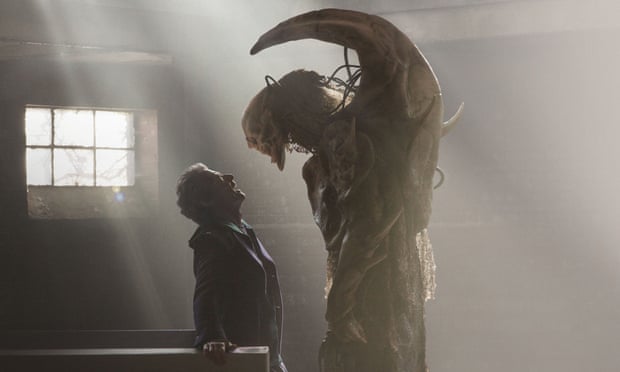
So lets talk about the Fisher King, as he is the big selling point of this week's episode. Three people portray this imposing creature: Neil Fingleton (standing at 7ft 7in!) as the physical part of the character, Peter Serafinowicz (the voice of Darth Maul in Star Wars) saying the dialogue, and heavy metal vocalist Corey Taylor (Slipknot and Stone Sour) providing the monster's roar. All three do fantastic jobs and, combined with a striking design, help to make the Fisher King one of the best Doctor Who monsters of the modern era. Such a shame, then, that he barely gets any screen time. While he is by far the best thing about the episode despite only a brief appearance, think about how much better it could have been with his role being expanded, or have the story be a three-parter.

The only other thing that I didn't enjoy was the forced romance between the crew members. When the Fisher King first appears, he kills crew member O'Donnell (Morven Christie). Bennett (Arsher Ali) is particularly effected by this, as it is suddenly revealed he had feelings for her, despite there being little to no indication of this, nor any chemistry between the two of them. Then, after the Fisher King is defeated, Bennett gets Lunn to admit his feelings for Cass, as life is too short. Lunn does so (in sign, of course) and he and Cass end up together. It's slightly more believable this time around, with them being together in many scenes due to Lunn needing to translate Cass' sign language. However, its still pretty sporadic as there was never any hints of romance between them.

Before the Flood's fast past certainly makes up for any complaints involving the characters, though. The ghosts are still out to catch the remaining crew members, which are the more intense scenes in the episode. The build up and first appearance of the Fisher King is handled with a good deal of tension, with us only being able to see glimpses of him at first, as well as only hearing his terrifying roar. Peter Capaldi and Jenna Coleman have to carry the majority of the episode, with them cut off from one another by being in different time zones. They maintain their great chemistry and performances throughout, making them, for me, a fantastic pairing and one of the best since the show's revival in 2005.

To summarise, Before the Flood will stand out in the series for introducing a great new monster. It concludes the story in a complex manner, but not too complex that it doesn't leave you unsatisfied. I preferred Under the Lake for its focus on horror elements and style, but Before the Flood is still a worthy entry in this so far strong season of Doctor Who. Next week, we journey to a land of Vikings, and a mysterious character (Game of Throne's Maisie Williams)...

Wednesday, 7 October 2015

Doctor Who: Under the Lake Recap


With ghosts appearing from the night and being submerged in an underwater, the Doctor and Clara really have their work cut out for them this week. Like the previous story, we have another two-parter here, and the show has yet again crafted a strong opener for an intriguing story that's packed full of style.

After a spacecraft is discovered by the crew of an base beneath the surface, the crew's leader is swiftly killed in an manner that leaves the others baffled. Soon after his death, he reappears as a ghost to menace the crew, whereupon the Doctor and Clara arrive in the TARDIS. With the ghosts only appearing at night, the team must discover the reason why these ghosts exist before they meet the same fate. These efforts aren't to discover the truth aren't helped when the ghosts start to take full control the base, the Doctor and Clara become separated, leaving Clara and half the crew trapped with the ghosts, and The Doctor and the others travelling back in time in the TARDIS in an effort to prevent disaster.

What I really loved about this episode was the look. The base's narrow corridors combined with its modern look makes for a setting that is both visually appealing, yet intimidating at the same time. Its a location straight out of a classic Doctor Who story, and provides plenty of opportunities for scares. Having an underwater story is a good way to keep things fresh, and combining this setting with a ghost story is a nice twist. The show hasn't looked this good and expensive for some time now.

The story was well paced, with there being a chase set-piece midway through the episode to keep our attention. Like with the opening two-parter, we'll only really get a full grasp of the story once the second part is aired. What I admired about Under the Lake was its focus on suspense over exposition. There are plenty of moments where the ghosts haunt the team before they finally begin to learn how it is they exist. Not having the ghosts let loose and base an entire episode on explaining every detail would have been tiresome.

The only fairly weak point are the supporting characters. Only one of them has a clear role in the story, that being Cass (Sophie Stone). Having a deaf actress is an uncommon move for Doctor Who, and she is by far the most interesting and fleshed out of the episode's cast. She clearly demonstrates a no-nonsense attitude, but also compassion despite only being able to communicate via sign language. Lunn (Zaqi Ismail) is only memorable for his role of interpretor, and the other two say and do. There's this one character, Pritchard (Steven Robertson), who is the cliché "out for a profit" member of the team, but thankfully he's axed off pretty quickly.

As the next episode follows on from a surprising ending, we have more ghosts, time travel, and most exciting of all, a new monster to look forward to. After an exciting opening story, series 9 continues on good form with Under the Lake, and next week's episode will look to continue this run with its secret weapon: Slipknot vocalist Corey Taylor providing the monster's screams!